Summer 1841. Sophie Knorring’s Diary.
← Read May, 1841 | September 1841 →
Begun around May 1, 1841, at her parents’ estate of Paslep, completed around March 1, 1842, in St. Petersburg *. The discoverer of this document and the author of the detailed commentary on the text is the historian Sergei Gavrilov
All parts of the diary by month: May 1841 | June, August 1841 | September 1841 | October 1841 | November 1841 | December 1841 | January 1842 | February 1842
June 1841
* Hover over the bold text to see the comments. On mobile, press and hold your finger on the bold text until you finish reading.
1st Sunday.
The weather was overcast; it rained in the morning. Immediately after coffee, Mama conducted the domestic service and read aloud once again the beautiful sermon by Hofacker on the Rich Man and Lazarus. Then I lay down; I had terrible cramps in my stomach. I lay there until dinner. Pauline U[ngern] arrived, so I had to force myself [to get up]. In the evening the gazebo was being repaired; I admired the [craftsmanship of my] family. Mama wished to speak with the Carlbloms; immediately after supper I lay down to rest. I missed the evening prayer. The weather is magnificent.
2nd Monday.
I rose late and felt much better. In the afternoon, my sisters and Helene rode to Lückholm, where they found no one at home, as everyone was at the neighbors’ all day! Conversed with the old Baron in the park and the woods. They returned home quite late; Mama went to the small garden, and I was glad when I reached my bed, as I was still very tired.
3rd Tuesday.
The weather changed very frequently; it rained heavily, but the evening was beautiful, albeit chilly. In the evening I worked very diligently on Fanny’s dress. After the meal, Pauline stopped by for an hour. Helene escorted her back. The weather became rather fine; I paced the hall for a while with Fräulein V.
4th, Wednesday.
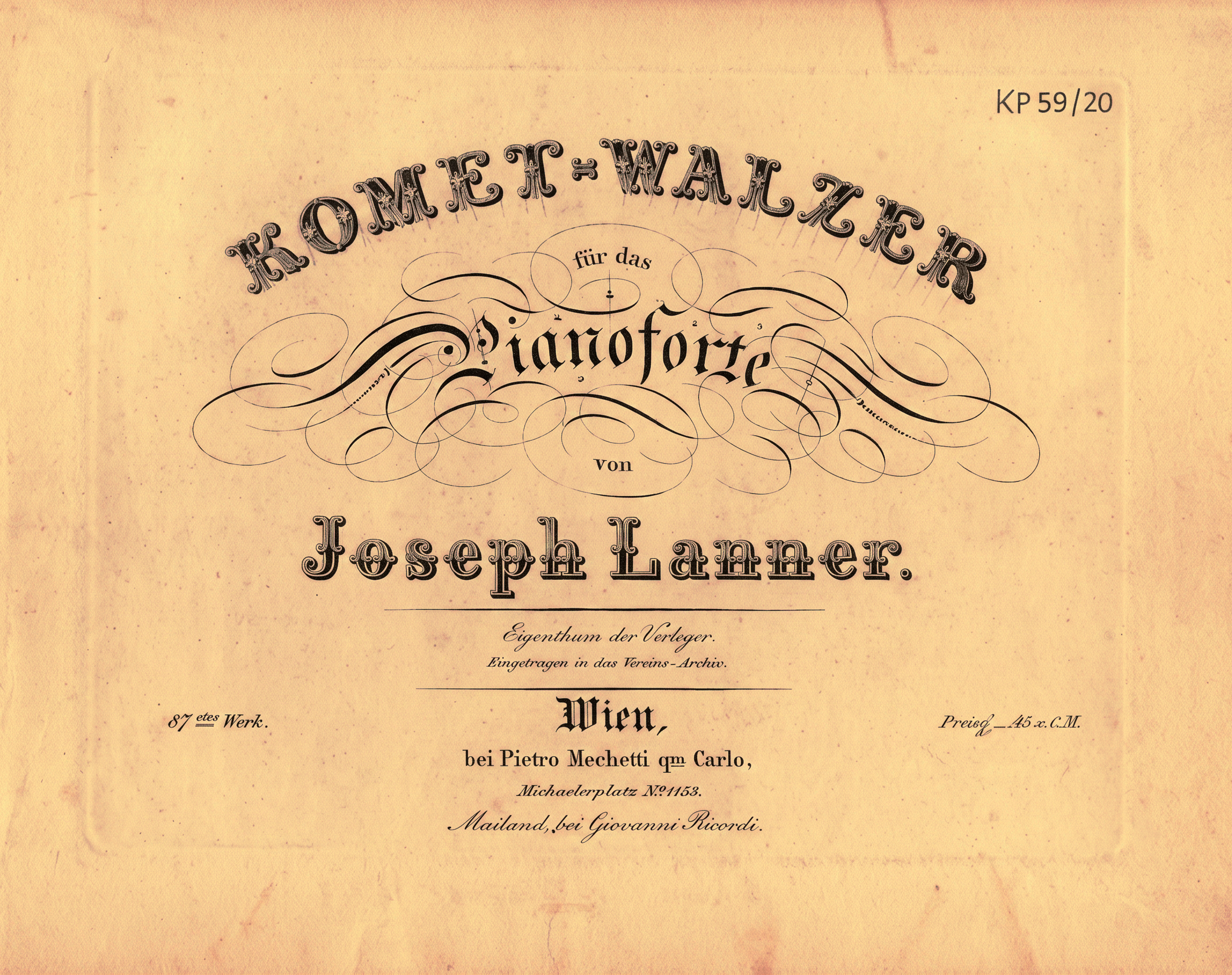
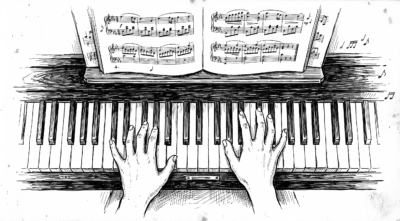
We rose very early; Mama and Louisa went to Hapsal. I also considered it, but changed my mind [yielded]. After my dear [family] departed, I sat with Fanny and Mariechen to finish the dress before the meal. The weather was very fine. Helene diligently embroidered names. By dinnertime, they returned home. Mama was very tired and lay down to rest. I sat content with the fact that Clementine had sent me such lovely fabric for a dress. After tea we walked, as usual, as far as the Paslep village. I was very tired; before supper, I played the “Comet Waltz”* with Amalie.
The Komet-Walzer, Op. 87 by Joseph Lanner*
August, 1841
1st, Friday
Overcast, bleak weather, rain. I worked and copied out my diary; I frequently had to put down my pen and give free rein to my thoughts; ah, when the heart is so full, one yearns so strongly for the Lord, one so longs to glimpse what He has prepared for us, and what the Lord’s will is in this matter! So it was with me this day; for my feelings and thoughts I had but a sigh, which I sent upward to the Lord.
2nd, Saturday
The weather is quite fine and clear. We went to Hapsal to see Auntie: Mama, Helene, Papa, and I; the crossing was quite good, albeit rather windy. In the morning Kursell arrived; I did not see him, as I was freshening up [attending to my toilette]; we dined at the Stackelbergs’; after the meal we went to the Frantzes [?], Papa came here [?] to visit Nuckö; Papa crossed over there, we remained there for tea; the Kursell young ladies came there as well. In the evening, when we departed from there, we took another short walk with the Stackelbergs.
3rd Sunday.
In the morning the Kursell young ladies came to us, as well as Aurelia and Agnes Kahlen, then Kursell arrived, who stayed with us for quite a long time; von Knorring from W.[eissenfeld] was passing by; Mama went down and told her that we intended to come to them for dinner. We spoke much, and of various subjects; I was not yet dressed when Madame von Knorring arrived and took Auntie away, having visited us as well. Then, upon arriving in Weissenfeld, the Kursells arrived there; «je ressentis au premier instant une vive emotion, et la rougeur me monta au visage» (in the first moment I felt a vivid emotion, and a blush rushed to my face (Fr.)), the Lord helped me overcome this embarrassment as well. During dinner, my throat seemed to catch [there was a lump in my throat]. In the afternoon we first went out onto the balcony, and then into the garden; K[ursell] was very friendly toward me. When we went back inside, candles were brought in, we chatted quite a bit, and a little after six we departed.

In Hapsal we changed clothes in haste, when suddenly K. [Kursell] entered with my little bouquet, which I had forgotten in Weissenfeld, and told Mama that he intends to come to us this week. This shocked me greatly; I thought: ah, my God, how will all this be, what will Papa say to this. Then we went to the Frantzes, where we drank tea; I had the joy of exchanging a few words with dear Blanc, which was surprisingly pleasant for me. And even more so when she told me that she likes Kursell. And at parting, when I asked her to pray for me, she said to me: “Remain firm, dear Sophie, the Lord is with you.” Shortly before tea, Mama called me into her room; she asked me whether I had come to any decision, and advised me to calmly think everything over once more. And she told me what Mohrenschildt had conveyed to her, including that Kursell deeply regrets my coldness [aloofness]. In conclusion, she added: “Be calm, the Lord will be near you, He will not forsake you!”. I cannot express what a balm these words became for my poor, sick heart, what comfort they gave me. I asked Klan to pray for me, and thus we parted. After we had taken our leave of everyone, we departed; at sea we encountered the mail boat, and we passed quite close to each other with K…, his sisters, and his cousin… In the boat I gave free rein to my tears all that I had just heard from Blanc lay like a heavy burden upon my heart. Already on the peasant cart I continued the journey by land and surrendered to my thoughts, which carried me hither and thither; I could not properly grasp a single one of them. My heart was too agitated. Exhausted and weary in body and soul, I arrived home. During the evening prayer I hoped that I might pray earnestly, but even then I could offer the Lord nothing but tears. In bed I wanted to think everything over seriously, but sleep closed my tired eyes and forced me to forget my distress.
4th, Monday.
The air was mild, but it rained time and time again; the sun scarcely showed itself, it was just as overcast inside me. I dragged myself [to and fro] all day, so exhausted did I feel, j’avais le coeur gros de douleur (my heart was heavy with sorrow (Fr.)), and I was saddened most of all by the thought that Kursell wishes to come, and that on Thursday Mama wishes to send him word of what I have decided. In the afternoon I spoke of everything at length with Fanny; ah, and sharing this does me such good, it would be such a great relief for my heart if everything were finally clear to me. Only the Lord alone can do this. The doubt, of course, is whether Papa will want this he is so unwelcoming to him, which causes me such pain. If Papa does not wish to give his consent to this, then I am ready to refuse him [Kursell] definitively, because rather than leave Mr. Kursell in uncertainty for so long, I could instead unite with him with all my heart. To make a decision, may the dear, sweet Jesus Himself help me in this and inspire me as to what I must say and answer. Lord, Lord, have mercy, help me!! In the morning I wrote to Blanc, at noon I talked for a long time with Fanny and wept heartily; I could not undertake any proper work; I had neither the strength nor the desire for it. After tea I went for a walk in the garden, and after that to the Great Garden with Mama and H[elene]. The evening was magnificent. Dear Klan’s words came to my mind repeatedly: “Pray earnestly and unceasingly, and all will become clear to you; the Lord will not forsake you.”
5th, Tuesday.
Although it rained in the morning, by noon the weather had cleared completely; it was a warm summer day, yes, quite rare for this gloomy summer. In the morning I wrote; in the afternoon we all went to the pastorate to visit Eugenie [Ungern-Sternberg] once more before her departure; we were received very amiably, and Carlblom himself was in particularly high spirits. It was a rather pleasant evening. As we walked home, we stepped into the chapel for another moment. A very heavy fog in the evening thoroughly chilled the air. My soul felt heavy this day, although my thoughts were incessantly occupied with a matter so important to me. We decided not to withdraw from society, but to continue in the same vein; the dear, sweet Jesus will help me.
The drama surrounding Mr. von Kursell continues to gain momentum. Sophie copies out her diary, prays, and meets the rejected suitor once again, which causes her tremendous agitation (so strong that she even switches to French). Different entries appear under the same date in the diary Sophie was rewriting the diary, slightly correcting and softening the unfolding events. We are likely reading the fair copy the final notebook into which Sophie transferred her thoughts from her rough drafts, reliving the events and adding reflections to them from the vantage point of elapsed time. This explains the beautifully even handwriting and clear structure.
The diary turns into a veritable novel. Mr. von Kursell makes an incredibly romantic gesture he brings Sophie her forgotten bouquet. Sophie finally admits to herself that she could unite with him with all her heart, but she is tormented by the attitude of her father, who is set against the suitor. She weeps in the boat, switches to French from the overwhelming flood of emotions, and seeks support from her friends and God.
6th, Wednesday.
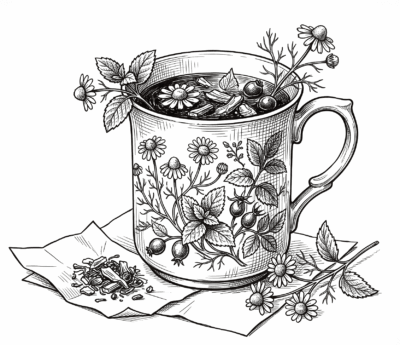
In the morning I drank my decoction [herbal draught]. Soon after coffee I sat down at the writing desk. Immediately after this, Mama called me, we went into Papa’s study, and Mama began a rather long and agitating conversation with me about Kursell; I told her that I love him, and nothing more. She did not seem opposed, and told me that now I must speak with Papa myself, which is to the highest degree terrifying for me. And this had to happen this very day, as Mama had to give K[ursell] some definite answer the following day. In the morning, K. [Carlblom] was in the small garden; Fräulein W[iedemann] also came there; she spoke with tears and sympathy. After the meal we both went to the Great Garden, where I shared our conversation with her, and it was perfectly clear to her that I must speak with Papa, which she considered quite natural, but I absolutely could not bring myself to do it, and so the day passed. I was very exhausted and remarked: it seemed to me that I could not survive this time, so weak and worn out did I feel. I felt truly unloved and wretched, monstrously and inconsolably. May the Lord have mercy upon me and help me; He alone can do this, I am capable of nothing. Only He, the All-Loving, can give me the strength and courage today for this step; on my own I am capable of absolutely nothing.
In the evening I went to sleep without attending the evening prayer, as Mama had a long conversation with Fräulein W., it was late, and from fatigue I could scarcely keep my eyes open.
7th, Thursday.
Early in the morning, at 8 o’clock, Fanny went to Hapsal. [We] walked with Amalie [Wiedemann]. After coffee, I went into the garden with Mama, and we talked amongst ourselves the entire time. When suddenly Eugenie Ungern and Aurelia K[ahlen] arrived to say goodbye: she was to leave this very day. She stayed with us for a couple of hours; at noon she went home, we escorted her in the droshky as far as the tavern, from where Helene and I walked home on foot. The weather was beautiful and so warm, and a pleasantly cool breeze was blowing. Soon after dinner Fanny returned home; she had much to tell me about the Kursells, which naturally interested me, and gladdened my heart, for she imparted something highly pleasant to me, which made me forget my anxieties for a moment. At three o’clock the four of us rode to the pastorate to say goodbye to Eugenie, who rode out to meet us on post-horses; we did not go in, but turned around; many more tears were shed. We went into the garden, where we remained for quite a long time, all of us sitting around; [it is impossible] to describe how terrible I felt in my soul, so often did my thoughts wander to Kursell; if only I could [distract] my thoughts from those touching words that agitate my heart, [but it] was impossible; I felt so unwell and indescribably [heavy] in my soul that I hurriedly yearned for my bed. We helped to pack things and ate there once more; we bade a heartfelt farewell and departed. As a keepsake, she was given a ring with a red stone, which I had from Emma. A tiny red coral heart fell out of the ring. Eugenie, fortunately, found it again.
6th, Wednesday.*
* Repetition of dates, rewriting of the diary.
The weather is magnificent. Gloomy clouds hang over my soul, which time and again resolve themselves into tears. I so yearn for peace; Lord, grant it to me! In the morning I had a short conversation with Papa; although he was very kind and welcoming, he still did not express himself definitively. In the afternoon Papa rode to Hapsal. Mademoiselle W. arrived in the afternoon; we spoke a great deal of my affairs; she conveyed to me the opinion of dear Blanc, which calmed me greatly. In the evening, while we were in the garden, Papa returned from Hapsal. My anxiety was profound; I went indoors to speak with Papa, but Papa said absolutely nothing to me at all. In the evening I prayed fervently, and Blanc’s words came to my mind once more: “Pray earnestly and unceasingly, and all will become clear to you; the Lord will not forsake you!”
7th, Thursday.*
* Repetition of dates, rewriting of the diary.
The weather is quite fine. In the morning Papa spoke with me and gave his consent, after which my restless soul was completely calmed. At 11 o’clock we – Mama, Papa, Helene, and I, rode to Hapsal to spend the day there. K… [Kursell] soon came to us. We were in the small garden. Papa and K… went into the Great Garden to converse with each other there. Mama and Helene wept; I was very calm and composed [in control of myself]. When Papa and K. returned, we became bride and groom [were betrothed]. K. was very happy and moved. I was very solemn and asked the Lord to be with me. We dined there. After the meal we rode home. K… escorted us. In the evening I was very calm.
8th, Friday.
Magnificent weather. K… arrived in the morning and stayed the entire day. We spent a great deal of time in the garden. In the afternoon we went boating. It was wonderful. In the evening K… departed for Hapsal once again.
9th, Saturday.
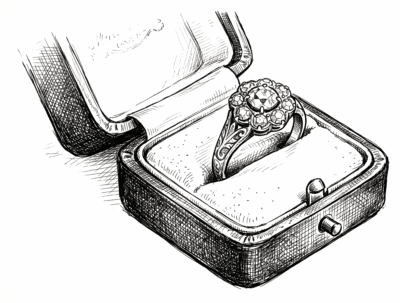
Overcast weather. K… arrived in the morning. He brought me a beautiful ring. I was very happy. We went to Hapsal. We paid many visits. All our relatives and acquaintances congratulated us. In the evening we rode home. K… stayed with us.
10th, Sunday.
Rainy weather. We did not go to church. K… stayed the entire day. In the afternoon, many relatives arrived from Hapsal to see us.
11th, Monday.
Good weather. K… left in the morning. I wrote many letters. In the afternoon K… arrived again. We went for a walk in the garden. In the evening he departed for Hapsal. We conversed very well [amused ourselves; a continuation of the sentence from the previous page]; before supper I took another walk with Helene, during which she spoke with me very sympathetically [with great compassion]. In the evening I was very exhausted. After supper I sat for a long time with Fr. W[iedemann] on the stairs; the evening was exceptionally beautiful. My heart felt much lighter; it seemed as though I had a sort of premonition of the future.
* Look closely at the dates: the 6th and 7th of August are described here. But on the previous spread (which we translated a little earlier, where Sophie joyfully announces her betrothal), the dates were also the 6th and 7th of August!
How is this possible? The answer lies in the entry from August 1st, where Sophie wrote: “I worked and copied out my diary.” We are faced with a unique case: this page is a rough draft (original, “live” entries made in the moment), while that page with the betrothal is the fair copy (an edited version written later). The handwriting here is much more sweeping, with corrections, and the emotions are raw and painful. On this day (August 7th), she had not actually become engaged yet, but was dying of fear at the prospect of speaking with her father!
12th, Tuesday.
The weather, it seems, becomes more beautiful with every passing day, for today was magnificent once again. At 8 o’clock Mama rode alone to Kedik to speak with Grandmamma and inform her of all that has transpired. The morning passed very quickly for me with chores; I bathed. After the meal, Auntie arrived, and after supper Mama returned as well; the evening was wondrous, without the slightest hint of fog or dampness; everyone else went for a walk, and I remained in the house. Mama went [for a walk], I strongly advised her to go outside. The air was enchantingly mild from the blowing breeze, the air was beautiful and warm; millions of stars looked down from the firmament. The evening passed very quickly. Grandmamma was very amiable, and also quite favorably disposed toward Kursell. Well, I have placed everything in the Lord’s hands; may He arrange all according to His will.
13th, Wednesday.
The weather was quite fine. As on all other days, I undertook nothing in particular today; I wrote a great deal in my room; after tea I worked; in the evening we cut out a beautiful collar for the falbala [flounce] and chatted; I spoke much with Fanny of times past, of Pyotr And[reyevich], and the conversation turned to Kursell. Mama wished to travel to Hapsal the next day to speak with the Kursells and offer apologies for not having met with them, and [to find out] what Papa’s decision would be. Every day I must endure something new in this affair, hear something new – hence this unbearable melancholy that I experience, and every day heaps something else upon me. After supper I shared my feelings with Mama and expressed how hard it is for me…
14th, Thursday.
Early in the morning Mama informed me of what she must tell the Kursells. I said that for my part I would take a pause [step back] for this year, and that it is now up to Papa to determine what happens next. Mama also told me that Papa is against any step… how hard it is for me to go against Papa; Mama said that, however, everything must be endured, and that the Lord will surely help. How it calmed me to know that she, too, supports me. Looking at me amiably, she asked: “So you have firmly decided?” “Yes, of course,” was my reply; we talked and prayed for a long time yet; finally, Mama withdrew and retired to rest. We two, however, chatted until 3 o’clock [in the morning]. We spoke at length about dear Kursell and how matters stand. Our vivid imaginations suddenly transported us into my future, about which we also had much to say to each other. I also shared with her the touching traits of my dear Pyotr And[reyevich]. Then Fr. Wiedemann told me about a particular period of her life, which she experienced during her year in the home of Pastor N.; it was a highly interesting account; I looked at her in amazement that she had felt such passion! Finally, Mama reminded us that it was time for sleep, and so we did. But what use was it, for this tale had so excited us that we tossed and turned without sleep for a long time, until Morpheus finally carried us to the land of dreams.
* Repetition of dates, rewriting of the diary.
14th, Thursday.
Early in the morning at 8 o’clock Mama departed for Hapsal while I was still asleep. The morning passed anxiously and gloomily for me; after the meal we all went to the Great Garden, and soon Mama returned home. As Mama had suffered from a toothache for a long time, she resolved to have a tooth pulled. The entire day she spoke only with him [with Kursell] and with the Kursell young ladies; however, after tea we all went to the chapel, I walking ahead with Mama, and there she recounted everything to me in great detail: that Kursell had come to her immediately, what he had said to her through his tears, and what Mama had said about other people, etc. It was already quite late when we reached home; the air was rather fine, but almost windy.
15th, Friday.
The weather was clear but windy. All day I was occupied with the thought that Kursell wishes to come tomorrow; I experienced great anxiety over this day. In the afternoon Helene rode to the pastorate to cut out a cap for Grandmamma there as well. After tea I rode there and picked her up. In the evening, while Helene and Fr. Wiedemann went for a walk, I strolled with Fanny in the small garden. She spoke of how tomorrow will pass, a day we have all been awaiting with such agitation.
16th, Saturday.
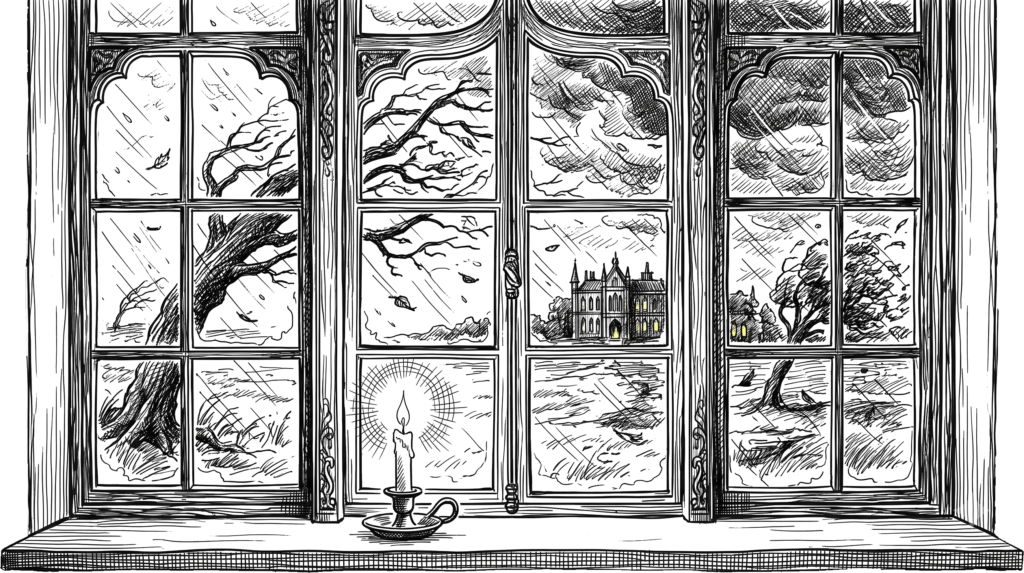
Immediately after coffee, Mademoiselle W. rode to Hapsal to bid farewell to her sister, who was leaving for St. Petersb[urg]. I had a fever, and I walked about as if in a dream the entire morning. After the meal we went to the Great Garden with Mama, and then Helene and I to the small one; a very strong wind was blowing, and I already began to doubt whether K… would come. In the morning I prayed fervently in my room, after which I became much calmer. At 5 o’clock I went with Louisa and Marie to bathe. Then Madame von Hacken… greeted us at the gates with the words that K….. is at our house. I immediately went inside, greeted him, and sat down to work by the window; after a while Papa entered, and, as usual, was very unwelcoming – which evoked a monstrously oppressive feeling within me. Thus passed the time until tea; after tea Papa and Helene rode to the chapel I sat at the clavier and took part in the conversation. Mama asked me in passing whether I wished to speak with K. privately; I declined this suggestion, as I felt I did not have the strength to begin a serious conversation on this day. Then Papa returned, K. went to Papa to speak with him; I prayed, weeping, in the bedroom; soon they both came out, and half an hour later dear Kursell departed. I also sent a note with him for Mademoiselle Wiedemann; it was already quite dark, and the strong wind had been blowing since the afternoon. Scarcely had he left when I spoke with Mama again and then hurried to climb into my bed; the agitations of this day gave me a severe headache. The storm grew very fierce, and I cannot deny that I was terribly frightened for dear K…..; dear Mama and Helene tried to calm me, but nothing helped but how great was my joy when, after supper, Louisa came to me with the words: imagine, Kursell has returned; the storm was too severe! It is impossible to describe my astonishment and joy at this news; I regretted endlessly that I could not go out to them. K. spoke with Mama again (How touched he must have been when Mama told him that I love him, and [revealed] what had frightened him so); we all went to sleep late.
17th, Sunday.
Having slept a little in the evening, I awoke in the night, and I felt exceptionally anxious. To know that K… is so close, I could not fall asleep for a long, long time, one thought replacing another; I can only compare this state to somnambulism [sleepwalking]. The sun had not yet risen, and I was already awake again and had completely lost sleep. At 6 o’clock I rose, as K… wished to leave early. When I entered, he had already drunk his coffee, and the horse stood at the door; after we greeted one another, and he inquired with great concern after my health, and we exchanged a few more words, he departed. I was left with a pleasant impression of him; his gaze rested so [intently?] upon [me?], and yet his quiet [gentle] manner toward me was very touching. After he left, I went to my room to have a good cry and calm my heart. Papa was very unwelcoming to me in the morning. And in general the whole day was very unwelcoming. Carlblom read a beautiful sermon on Job, but after church the von Wesselys from Nuckö came to our house with three boys, who amused themselves greatly here. After the meal Papa rode to Lückholm, while the three of us: Helene, I, and Mademoiselle W. remained at home. In the afternoon I, Mademoiselle W., Pauline Ungern, and Emilia Schwebs, whom I met on that day, went for a walk and escorted them to the gates. On this day I was in a very gloomy mood and was glad when I was home again.
18th, Monday.
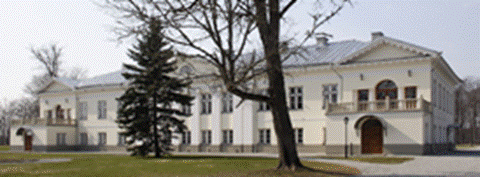
We rose rather early, dressed, and rode to Kedik to Grandmamma’s for her name day. During the journey I completely surrendered to my thoughts; in the forest we met Uncle Gustav. I brought greetings… and from Louisa… Aunt Lisette was also there; dear Grandmamma received us very amiably. She felt quite well. After tea we departed; the weather was magnificent, and soon I saw the moon again. With melancholy, I surrendered to my thoughts, and so passed the time after a rather pleasant journey back to Paslep. Upon arriving home, I once again found Mademoiselle W., as well as Pauline Ungern, who had not gone home because it was very windy; she stayed with us for the night.
19th, Tuesday.
The weather is quite fine and clear, although windy; the entire morning I was occupied with Pauline, and Mademoiselle W. told her a little about Saturday. After the meal Pauline left, and I escorted her as far as… after tea I went for a walk with Helene to the tavern. Over supper there was much talk of Mama’s trip to Revel.
20th, Wednesday.
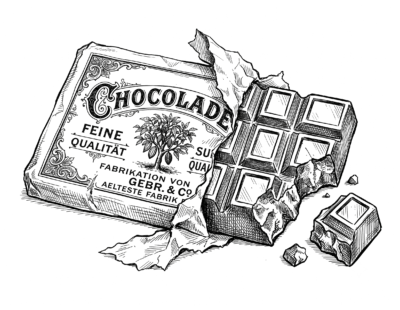
The weather was magnificent. In the morning all my family brought their things and packed them. In the afternoon I was treated to… chocolate; the whole day passed without our doing anything sensible. … After supper I went for a walk with Mademoiselle W. in the small garden; the moon shone magnificently, the air was warm and beautiful. Mama took a bath in the evening.
21st, Thursday.
Rose early. As Mama wished to leave at 8 o’clock. After coffee, Mama came to me and said that Papa wishes to speak with me; this shocked me, but I immediately turned my gaze to the Lord and asked Him for help, after which I went into Papa’s room. He asked me whether I had definitively decided to choose Kursell; I answered: “Yes, I have firmly decided.” I spoke with him for a long time; Mama was also present; he once again outlined everything to me from the most dismal perspective, so that after dear Mama amiably embraced me and began to cry, I left, sobbing bitterly, and Mama and Mademoiselle MacDonald departed. The rest of the morning passed in cleaning and bathing. After the meal I walked with Helene in the Great Garden for a very long time. … After supper I once again went for a walk with Mademoiselle W. by moonlight. The air was beautiful, but very chilly. It was a wondrous evening.
22nd, Friday.
The weather is clear and beautiful; in the morning I sat [reading/working], in the afternoon we were all in the garden, and as the sun was setting, I sang; after tea we walked in the little wood; in the evening Mademoiselle W. played the clavier, and then the newspapers were read aloud; the evenings are already growing long… After supper I went out with Mademoiselle W. for a moment into the garden to look at the lovely moon; until one o’clock in the morning I was still writing a letter to Aunt Minna, in which I also told her a little about my present situation. Keeping awake there, I had to think of this: may the dear God be very close to me, and may He soften Papa’s heart, making it kind and welcoming.
23rd, Saturday.
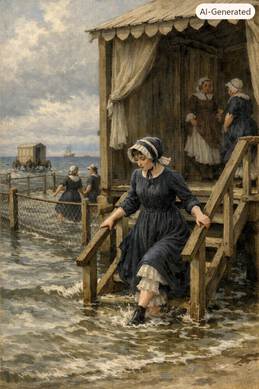
The weather is magnificent; in the morning I bathed and then wrote a great deal. After the meal we all went to the Great Garden, then we sat on the stairs, and Mademoiselle W. began to read aloud to me a very interesting book Bulwer’s “Maltravers”. At 5 o’clock Helene and Papa rode to the chapel; Papa went to the pastorate; Mademoiselle W. and I walked there on foot later. [Returned] home very late; we stayed there for half an hour, and Dr. Carlblom escorted us back, to our joy, as the carriage rode out to meet us only halfway. After supper we went into the garden again; the moon shone very brightly, and the air was almost warm.
What incredible and captivating reading! These rough drafts reveal a completely different, far more dramatic and vivid picture of the betrothal than the “polished” fair copy Sophie wrote later.
It turns out the suitor arrived to ask her father for her hand in the very midst of a storm, her father was exceedingly unwelcoming, and poor Kursell was forced to depart into the night and the tempest. But then a scene worthy of a Brontë sisters’ novel takes place: due to the severe weather, he turns back!
The contrast between the rough draft and the fair copy: Recall that in the fair copy of the diary (which we read earlier), Sophie described everything smoothly: “Papa gave his consent, my soul was calmed, we became bride and groom.” The reality described here, however, is astonishing! Kursell arrives; Papa is furious (“very unwelcoming”), they speak behind closed doors, after which the suitor rides away into the gathering storm! Formally, no happy betrothal took place on that day.
The romance of the storm: The situation is saved only by a caprice of the Estonian weather. The storm proves so severe that Kursell is forced to turn his carriage around. He spends the night in their house, and under the cover of night, Mama secretly informs the suitor, unbeknownst to the stern father, that Sophie loves him.
24th, Sunday.
The air is warm and mild; the sun did not shine at all in the morning, as it was very cloudy. In the morning we read a sermon together. After the meal we walked in the Great Garden, then we sat on the stairs, and Mademoiselle W. read “Maltravers”; it is very interesting. After we drank tea suddenly the dogs barked, we heard a droshky and thought it was the Rosens but instead we saw the dear, sweet Otto Kursell, although… in the depths of my heart I was infinitely glad to see Him again; but my fright was too great, and I lost the power of speech, thus did I greet Him, Papa also settled down… while… …only the gentlemen spoke with each other for a long time, Papa sat as usual, and I knew what he was thinking to himself; finally a few rather heavy drops of rain drove us into the room. At the tea table Kursell spoke quite a bit, although it was noticeable that he was very embarrassed; I admired his self-control! Papa, by old habit, was very unwelcoming, which caused me profound pain, but Otto, despite this, was friendly, obliging, and polite; although we still had not had the fortune to explain ourselves to each other in words, it still seemed to me that he understood my glances. Shortly after tea he departed. I was so deeply agitated by this visit, which turned out to be so unexpected, and Papa’s behavior so distressed and offended me that I shed bitter tears, I felt very unwell, [and] to recover myself a little, I went out into the garden for a short while. At night I dreamt very restless dreams. I felt very unwell; may the Lord soon lead me out of this tormenting, unbearable situation.
25th, Monday.
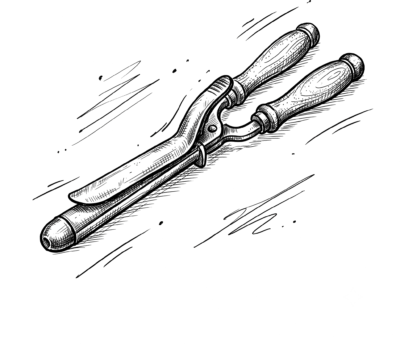
In the morning I curled my hair [with curling irons]… The afternoon passed very quickly; soon after tea dear Mama arrived from Revel, which was a great joy for all of us. She had so much to tell us, and immediately after supper, when Mama was already lying in bed, she imparted little joyful news to us, and that is a terrible pity. In Hapsal they immediately visited the Kursells…
26th, Tuesday.
…it was very cloudy and overcast. After the meal the weather cleared. The weather was beautiful and welcoming. The morning was spent unpacking everything from the large trunk; Mama helped me greatly to put my wardrobe and chest of drawers into perfect order. After the meal I worked; after tea I rode with Mama to the post office. On the way back Helene took my place in the carriage, while Fanny and I walked. Pauline escorted us to the gates. We spoke much of my dear Otto, and we continued this conversation, so interesting to me, into the evening… it rained very heavily. After supper Mama read to us a beautiful sermon by Hofacker.
27th, Wednesday.
How surprised we were that after such a rainy evening the weather was so beautiful and clear. In the morning Mama and I sewed, [Mama] went to Papa to persuade him to give K… an answer this week, but, unfortunately, he still cannot be moved to do it. In the afternoon Mademoiselle W. read “Maltravers” to us, which becomes more and more interesting… Mademoiselle W. and I asked her to implore Papa to answer him… although it was hard for me that Papa shows so little love for me and Kursell. ..[before/after] supper I went to Papa with a tearful face and a trembling voice and asked him about it; he answered me coldly. “Yes, one can answer him this: I might go to Hapsal in the evening, or Mama; I do not know why you are in such a hurry – it will not run away.” These coldly and measuredly spoken words wounded me deeply. And I gave free rein to my tears. Mama, her old love and friendliness soon dried them for me. And in the evening we also read a magnificent sermon by Hahn on prayer. I felt profoundly struck by its truth.
28th, Thursday.
After coffee we went to the attic, where we inspected the provisions, then I wrote a little in my room and spoke with Mama in the bedroom; after this I went with Mama to the Great Garden to transplant flowers, and we planted from there into the small garden, but soon heavy rain drove us inside. After the meal I read a sermon by Hof[acker] to Mama. The post brought us a letter from Kedik, as I am still anxious whether Aunt Louisa has left for St. Petersb[urg]. We also receive no news. After tea I went for a walk with Mademoiselle W. in the small garden, and then I went also to the [greenhouse?]… for a walk. After supper I read aloud a magnificent sermon by Krummacher.
29th, Friday.
The weather is quite fine, but before coffee Mama spoke with Papa for a long time on my account; the conversation lasted very long, otherwise the day passed quite ordinarily. In the evening Mama spoke with Papa again about the trip to Hapsal. After supper we read Hahn’s sermon on the centurion’s request.
30th, Saturday.
In the morning Mama spoke with Papa for a long time to [understand] whether she should give Kursell consent; Mama departed. After this, I prayed fervently to the Lord, which made me feel lighter. On this day I felt very unwell, and I lay in bed all day. I had temptations and struggles that troubled me, and I wept. After the meal, Marie E. was here. Mama returned home in the evening and told me how happy K. was when she brought him the news; we expect him here tomorrow. I saw Marie only for a moment at the door, for immediately afterward everyone rode to the chapel; Mama rode with them. I lay down to rest immediately after supper. In the evening they read by my bed a penitential sermon [by author K…], which touched me greatly and which suited my present situation so well. After a beautiful prayer by Mama, I fell asleep.
31st Sunday.
And so this day has come too! So momentous for me. The weather was beautiful and clear. Mama conducted a beautiful service in the morning, after which we dressed, and at 12 o’clock Kursell was here. Yes, what else is there to write? In my soul I felt terrible. Papa spoke with me very seriously and without love [sternly] in private in his room; I remained firm in my decision. After this K. entered, and soon after Mama came for me; I entered, and my dear, beloved parents gave me over to Kursell; he was deeply moved, while I stood there devoid of all feeling. Then I withdrew to my room until I saw him at the table. In the afternoon we went into the garden. And this was the first time we spoke with each other. He was moved, and so was I. Then we went into the small garden, where we sat for a long time, until suddenly Mr. and Mrs. Taube arrived. This visit was unpleasant to Kursell; at 8 o’clock the Taubes departed. After supper Kursell took his leave amiably and cordially. I felt in my soul as if I had seen a dream. Everything within me was tangled and confused. In the evening we read a sermon once again.
These rough drafts reveal a completely different, deeply personal, and painful cross-section of the story. In the smoothed-over “fair copy”, Sophie simply wrote that Papa gave his consent, and all was well. Here, however, we witness a genuine scene of a difficult conversation with her father.
Her father does, in fact, summon her to his study, sternly asks whether she has definitively decided to marry Kursell, and, upon hearing a firm “Yes”, begins to paint her future in the gloomiest of colors, bringing both mother and Sophie herself to bitter tears. And at the end of the spread, a magnificent literary detail of the era appears!
This manuscript is a true historical detective story, and you have just found the primary clue in it!
Remember, in the “fair copy”, Sophie wrote that her father gave his consent on August 7th, and they were happily betrothed on that very day? Well, this rough draft proves that she was being disingenuous in the fair copy. She compressed time to conceal how many weeks her torment actually lasted!
The actual betrothal took place only on August 31st, after long days of tears, entreaties, cold refusals from her father, and heavy family conversations.
All article commentary
1. Rich Man and Lazarus (der reiche Mann u Lazarus): Mama reads the family a sermon on the classic evangelical text (Luke 16:19–31) as expounded by the popular preacher Ludwig Hofacker.
2. Cometen Walzer (“Comet Waltz”): A stunning cultural detail! Sophie plays piano four-hands with Emilia. This likely refers to the extremely popular piece at the time, “Die Kometen-Walzer” (Op. 87), composed by the Austrian composer Joseph Lanner. Written in 1835 amidst a wave of widespread public fascination with astronomy (the anticipation of Halley’s Comet), the waltz quickly became a hit in European salons.
2.1 The Komet-Walzer, Op. 87 by Joseph Lanner. Step into a cozy 19th-century drawing room to hear a lost masterpiece. Joseph Lanner’s Komet-Walzer, Op. 87 is a lovely pillar of the Viennese waltz tradition, but, surprisingly, not a single orchestral recording of this piece exists today. Because this melody was lost to time, the sound in this video is a complete digital restoration. The original 1835 sheet music was carefully transcribed into a sequencer and brought to life using an AI sound synthesis application to recreate the relaxed and charming atmosphere of a young lady playing the piano in her own parlor.
3. We went to Hapsal to see Auntie: Perhaps this was his father’s sister, Charlotte von Stahl. In 1825, P. Vyazemsky wrote about her to his wife from Reval in an ironic spirit: “The other day I dined with Mme. Stahl, Knorring’s sister… Mme. Stahl, our Knorring’s sister, who is staying for another week; I hope to ride her, but, I bet, without saddling her” (see P. Vyazemsky’s letters to his wife. Letter from Reval, July 7-8, 1825). Probably, the cheerful 30-year-old widow Charlotte von Stahl attracted the attention of men. Her husband’s sister, Anna von Stahl, was the mother of Otto Kurzel. Thus, Otto Kurzel was technically Sophie’s first cousin. Moreover, on his mother’s side, Otto Kurzel was the great-grandson of Béla Strahlborn. He had a common ancestor with “our” Strahlborns in the 6th generation. Ludwig and Alexander Strahlborn were his fifth cousins.
4. Aurelia and Agnes Kahlen – likely daughters of the Livonian landowner Georg von Kahlen, who were also spending the summer at the Hapsal resort.
5. Switch to French: The lines «je ressentis au premier instant une vive emotion, et la rougeur me monta au visage» (in the first moment I felt a vivid emotion, and a blush rushed to my face) are written by Sophie in French. In noble diaries of the 19th century, switching to French was often used to describe the most intimate, romantic, or intense emotional experiences that seemed too “candid” to the author in her native German.
6. “The throat seemed to catch”: Sophie uses a vivid metaphor: «war mir der Gurgel wie zusammen geschnürt» (literally: the throat was as if tied/tightened). The emotional tension of having the rejected suitor at the same table in Weissenfeld reaches a peak, even though outwardly all social decorum is observed.
7. The Bouquet Incident: This is a classic 19th-century courtship trope. Sophie “forgets” her small bouquet after a dinner party at the Knorrings’ in Weissenfeld, and Kursell uses this as a formal pretext (and a romantic gesture!) to break the silence, personally return the flowers, and declare his intention to visit their estate for a definitive answer.
8. Sprödigkeit (Aloofness): Mother relays Mohrenschildt’s words to Sophie – a friend or relative of Kursell. It turns out the suitor has not forgotten her at all, but deeply regrets her coldness. This admission breaks through Sophie’s armor.
9. Internal Struggle and the French Language: Sophie resorts to French once more: «j’avais le coeur gros de douleur» (my heart was heavy with sorrow). She confesses to herself that she has fallen in love with Kursell («I could instead unite with him with all my heart»), but patriarchal foundations give her no peace: her father clearly dislikes Kursell and treats him coldly. For a pious daughter, going against her father’s will (even unexpressed directly) is an unimaginable drama, so she prays to God to send her a solution.
10. Boats and Roads: The description of the crossing (mail boat, boats, transfer to a peasant cart Bauernwagen) beautifully illustrates the transport realities of the Governorate of Estonia. The Knorring estate was located on an island (now the Noarootsi peninsula), and the shortest route to Hapsal was across the strait.
11. Decoction (decocht): A 19th-century term for a medicinal herbal draught. Cf. Gogol: “did not yet have the custom of sleeping immediately after dinner and drinking some decoction spiced with dry gooseberries at night.”
12. The True Drama of the Betrothal: In the “fair copy,” Sophie wrote that on August 6th she merely had “gloomy clouds in her soul,” and on August 7th she received her father’s consent and became betrothed. This very rough draft reveals the harsh reality of patriarchal upbringing: Mother forces Sophie to go to her father herself (whom the girl fears to death) to ask permission to marry Kursell. Sophie physically falls ill from fear (drinks a soothing draught, cannot keep her eyes open, feels “wretched and inconsolable”) and fails to muster the courage to speak with him on either August 6th or August 7th!
13. Resolution of the Conflict with Father: On Wednesday Papa travels to Hapsal (presumably to gather information or think) and returns silent. Sophie’s tension reaches its peak. But the very next morning he gives his official Einwilligung (parental consent, without which the marriage of a noble daughter would be impossible and scandalous).
14. Date Alignment: Presumably, when Sophie neatly rewrote her diary weeks or months later (as she noted on August 1st), she decided to “compress” the agonizing days of waiting. In the fair copy, she merged her inner sufferings and the betrothal itself under the same dates to make the narrative smoother and more pious.
15. The Betrothal Scene: This is a classic patriarchal ritual of the 19th century. The women (mother and sister) weep in the small garden while the two men (father and suitor) withdraw to the Great Garden to discuss the financial, matrimonial, and legal terms of the marriage. Only after they have agreed and returned is the couple officially declared betrothed.
16. High-Society Etiquette After Betrothal: Immediately after the engagement, Sophie’s life changes. The next day the suitor takes her boating, then brings the engagement ring, and they begin making official visits (Visiten machen) to all their relatives in Hapsal to publicly announce their status as an engaged couple. Sophie also writes letters to relatives living far away.
17. Fear of Father: At one point Sophie became so frightened of her father’s displeasure (“Papa is against any step”) that in despair she suggested to her mother that they postpone the engagement for a year! Naturally, this momentary weakness did not make it into the fair copy.
18. Trusting Conversation with Mother: Sophie confesses to her mother how hard it is for her to go against her father’s will. The mother, in turn, shows remarkable support for a patriarchal society, asking a direct question (“So you have firmly decided?”) and promising her help.
19. Conversations Until 3 AM: The scene where Sophie and her companion Mademoiselle Wiedemann gossip until 3 AM about suitors, share dreams of the future, and exchange stories of past passions makes this diary remarkably vivid. It somewhat resembles Tatyana Larina’s conversation with her nurse. Sophie even poetically mentions Morpheus, the Greek god of dreams. At the same time, memories of the “touching traits of my dear Pyotr Andreyevich Severin” (see above) slip in, which are rather unusual for a loving bride-to-be.
20. Visit to the Dentist: A magnificent everyday detail! Mother travels to Hapsal not only to deliver the reply to the suitor, but also to have a bad tooth pulled. As a result, immediately after the dental procedure, she has to spend the entire day calming the weeping suitor von Kursell, who is begging for an answer.
21. Father’s Anger: Even the next morning (August 17th), when the suitor departs, Papa continues to be angry with his daughter (“in general the whole day was very unwelcoming”). It is obvious that he categorically disapproved of the suitor and only yielded (if he yielded at all) under intense family pressure.
22. The Bride’s Insomnia: The description of Sophie waking up in the middle of night and unable to fall asleep at the thought that the man she loves is sleeping in the next room (comparing herself to a somnambulist) is one of the most intimate and poetic moments of the entire diary.
23. The von Wessely Family: Betsy von Wessely was married to Woldemar Knorring. Her brother is Yegor von Wessely (Egor von Wessely), a military scientist, lieutenant general of artillery, the first professor of artillery sciences in Russia (1832), and a teacher at the Mikhailovsky Artillery School. His niece Alexandra was the stepmother of the famous Russian artist Mikhail Vrubel, raising him from the age of five.
24. Emilia Schwebs – likely the niece of Admiral Spiridov, a relative of Sophie’s on her grandmother Lantinghausen’s side.
25. Uncle Gustav – father’s brother, owner of the Vichterpal (Est. Vihterpalu) manor, which he received as dowry with his wife (Aunt Lizette), Elizaveta von Ramm. Prince P. Vyazemsky visited them in 1825 and 1826. In 1825 he spoke somewhat unfavorably of her in a letter to his wife in his usual caustic tone, teasing his wife at the same time (“Knorringa… no longer in her first youth, but beautiful and sweet, but calm down: her breath doesn’t seem to smell very good from the mouth”). However, in both 1825 and 1826, he did not fail to drop by their estate, a beautiful castle on the seashore: “now I am getting into the carriage and going to Vichter-Pal to the Knorrings for about three days… She bows to you and drank to your health.”
26. Dramatic Conversation with Father (August 21st): Unlike the smoothed-over fair copy, here we see how truly difficult it was to secure her father’s consent. He forces Sophie to confirm her choice, and then paints her future life with Kursell «aus einem trüben Gesichtspunkte» (in a gloomy light), driving both mother and daughter to tears. Sophie emerges from the study sobbing bitterly. This clearly shows that her father did not approve of the suitor (perhaps due to finances or reputation), but formally yielded to his daughter’s stubbornness.
27. Bathing of Young Ladies in the Baltic Sea in 1841: This was a strictly regulated, almost medical procedure taking place in enclosed bathhouses or bathing machines, wearing heavy covered swimsuits, separately from men, and under the supervision of attendants. It was not a beach pastime, but part of a “healthy lifestyle” according to the norms of the first half of the 19th century. However, decorum was sometimes neglected if bathing occurred in remote locations; cf., for example, Anders Zorn’s paintings “Reflections,” “Outdoors,” etc.
28. Maltravers: A fascinating detail of the nobility’s reading tastes at the time! This refers to the novel Ernest Maltravers, written in 1837 by the famous English writer Edward Bulwer-Lytton. This sentimental and philosophical novel about love, passions, and high society was incredibly popular in Europe and the Russian Empire of the 1840s. The girls read it aloud on the manor steps, an ideal illustration of the romantic era.
29. Chocolate as an Event: Entry for August 20: «I was treated to chocolate; the whole day passed without our doing anything sensible.» Hot chocolate in the mid-19th century was a very expensive, fashionable, and luxurious treat, which is why such a treat deserved a separate mention in the diary.
30. Revealing the Name: For the first time, Sophie explicitly states the name of her beloved, Otto. The entry «We spoke much of my dear Otto» (Wir sprachen viel von meinem lieben Otto) puts to rest any ambiguity regarding the suitor’s identity. He is Baron Otto Wilhelm von Kursell, born in 1802. By the time of the matchmaking in 1841, he was 39 years old, while Sophie von Knorring was around 20. Perhaps this age difference or financial matters were why Sophie’s father (Karl von Knorring) was so stubborn and “unwelcoming” for so long.
31. Quiet Mutual Understanding: The scene at the tea table is remarkably touching. Despite the father’s anger, which glares at the suitor, Otto maintains his dignity («I admired his self-control»). And although under strict rules of etiquette they cannot yet speak of their feelings aloud (“explain ourselves in words”), Sophie understands from his eyes that their feelings are mutual.
32. Gebrannt (Curling): The entry for August 25 begins with the word gebrannt. In the context of 19th-century noble morning toilettes, this meant curling the hair using special tongs heated over a fire. This was a standard morning routine before changing for dinner or visits.
33. The Centurion’s Request: The sermon read on August 29 is the evangelical story of the Centurion of Capernaum (Matt. 8:5–13), who asked Jesus to heal his servant, saying, “only speak a word, and my servant will be healed.” A highly symbolic reading for Sophie, who on that evening was awaiting a single “word” of consent from her father.
34. First Conversation Alone: The phrase «And this was the first time we spoke with each other» beautifully illustrates the manners of the Victorian (and Biedermeier) era. Sophie and Otto had already become official betrothed, having passed through tears, scandals, and parental consent, yet they had never once spoken alone in their lives up to that moment! All their previous encounters took place strictly under the watchful eyes of mothers, aunts, and chaperones.
34.2 The von Taube Family: The idyllic first date in the garden is interrupted by a sudden visit from neighbors Mr. and Mrs. von Taube (von Taube, another famous Baltic noble family). The fact that Kursell was annoyed by their arrival (“the visit was unpleasant”) adds an extraordinarily lifelike, almost comical detail to the scene.
35. Unbearable Situation: These rough drafts show the hostage-like position young women were in back then. Sophie loves Otto, Otto loves Sophie, Mother supports their marriage, but Father keeps everyone in suspense for weeks, refusing to give the suitor an official reply and poisoning the atmosphere at home with his sour mood. It is clear that these very painful weeks are what Sophie later so carefully “shortened” and crossed out when rewriting her diary cleanly!
National Archives of Estonia (EAA). F. 1334. Inv. 1. F. 78. EAA.1334.1.78 Tagebuch der Sophie von Knorring. [Diary of Sophie von Knorring. Volume II] (1841–1842).
← Read May, 1841 | September 1841 →
Discover more from Strahlborn and De Rionzini
Subscribe to get the latest posts sent to your email.

We transition from May into June. On these pages, Sophie describes her daily chores, the embroidery of monograms (“names”), her ailments, the reading of sermons on the Rich Man and Lazarus, and also her music-making- in particular, performing the “Comet Waltz,” which was highly popular at the time.*
*An interesting historical fact: Joseph Lanner published the “Comet Waltz” around 1835. Why a comet, you ask? It was in that very year that Halley’s Comet made its long-awaited and spectacular appearance, witnessed across the globe! The comet caused an absolute sensation in 19th-century society, inspiring art, jewelry, and music alike. Thus, this waltz captured that exact celestial excitement in Vienna and the world.