Sophie’s Choice. Part II.
“All started furtively to talk, to joke, to comment not without some malice, a suitor for Tatiana to assign.
Article Author: Historian Sergei Gavrilov
(Young men in the Knorring household)
To be the granddaughter of Andrey Severin is the equivalent, by modern Russian standards, of being the granddaughter of Alexey Miller. Or by American standards, the granddaughter of someone like Bill Gates. Sophie is a highly eligible match.
“The young Count Toll… is a truly charming man”; “an absolutely delightful man.”
But he doesn’t sing. Sophie seems to feel a mild admiration, but without personal attachment.
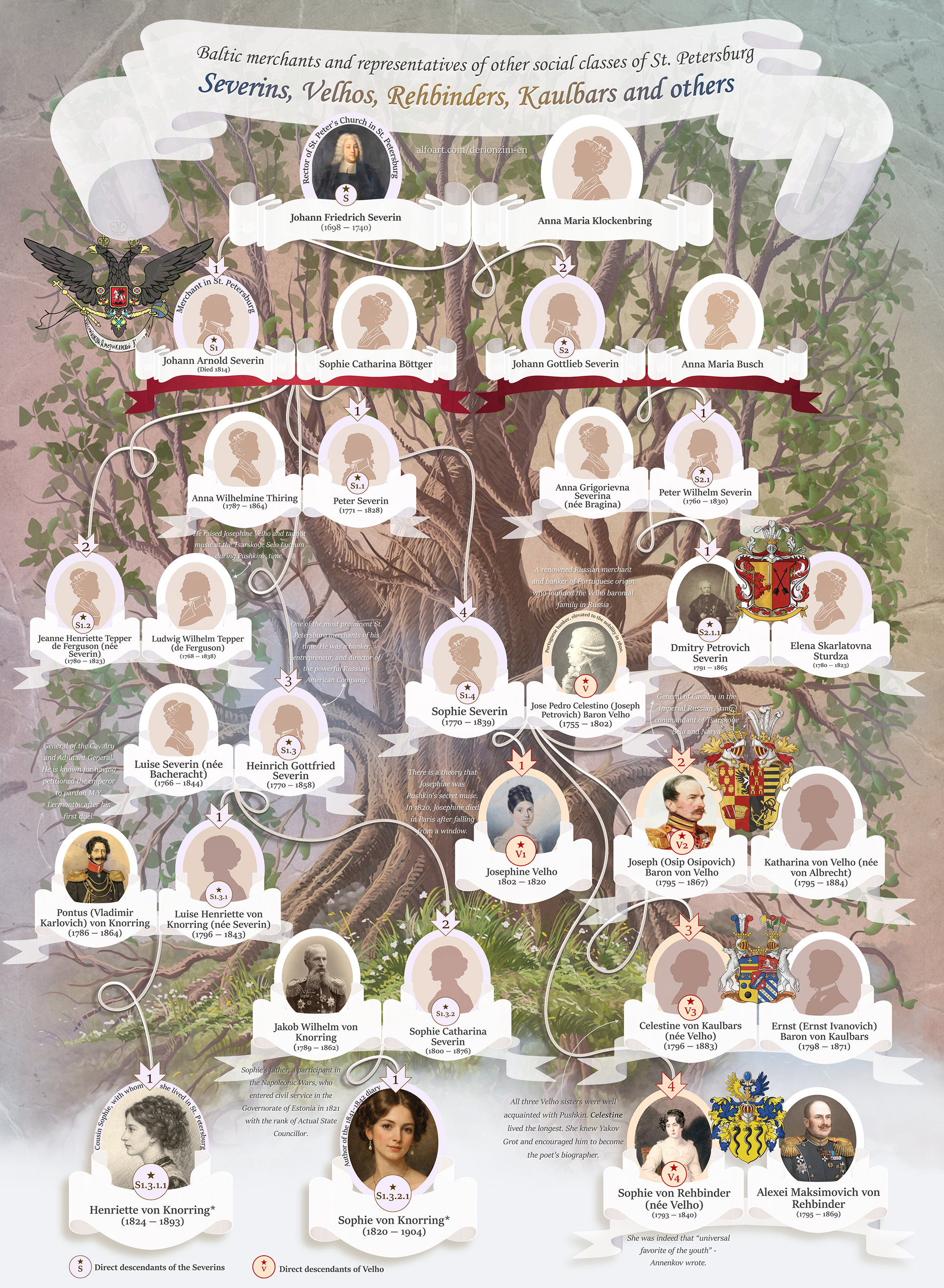
Portraits marked with an asterisk (*) were created by AI.
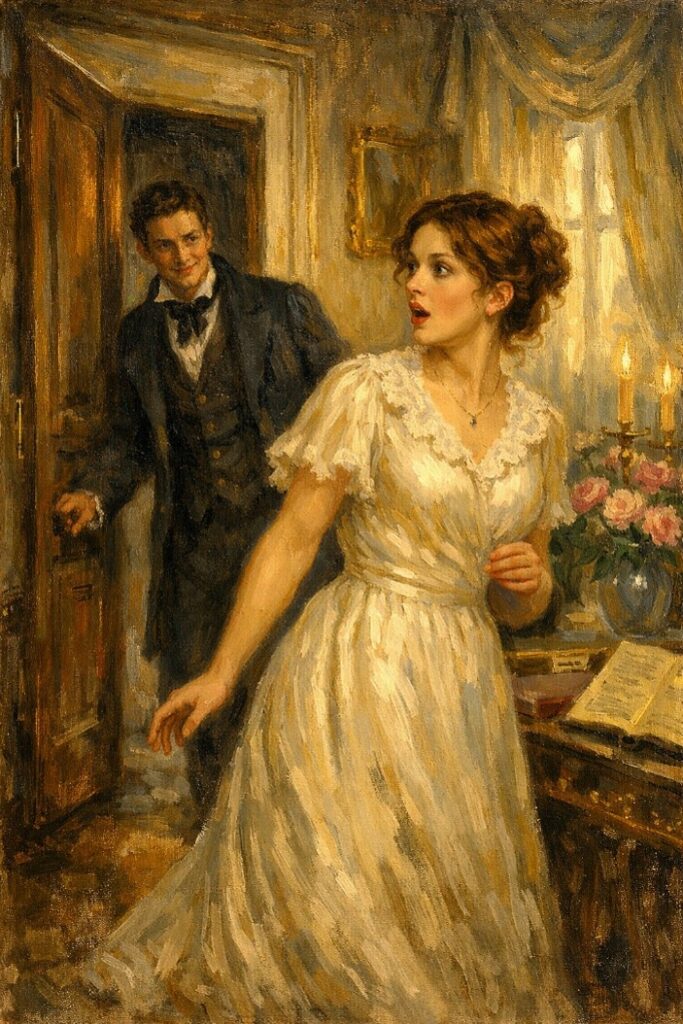
Most frequent of all is a certain Stenger; Sophie, it seems, is not very favorably disposed toward him. She doesn’t even call him by his first name.
“I was in my light silk dress and a new collar. I was very surprised when… Stenger suddenly entered uninvited. It is an incredible boldness to act this way in a social setting.”
She delicately substituted “boldness” for “impudence.”
Sophie’s tone warms when describing the “singing” gentlemen: the son of General Dyakov both sings and plays the piano:
“young Dyakov sat at the piano. He is a very handsome young man, blond with very expressive facial features. He has an exceptionally beautiful voice, but he sang little and without accompaniment until the very end”
But the warmest image in the succession of her admirers is Arthur Knorring, a representative of another branch of the Estland Knorrings (grandson of Otto Knorring, a general killed near Dorogobuzh in 1812, whose portrait is in the gallery of the Winter Palace; son of Colonel Knorring, a shareholder of the RAC). Sophie writes about Arthur with a sincerity rare for her. They are constantly together: breakfasts, music, walks, evening conversations.
“And Arthur, whom I like very much and who is a very good man.”
Through all these mentions shines a warm sympathy, trust, and quiet joy. This is the only young man she writes about so openly.
“Dinner at our house. He is a rather handsome young man, with beautiful blue eyes and an ugly mouth, and he is constantly laughing. After dessert, music played,Arthur sang”
“And the young poet’s memory slow Lethe will engulf.”
(about Lermontov)
One cannot fail to mention that Sophie’s uncle, General Knorring, was a participant in the trial of d’Anthès. It is also said that he tried to defend Lermontov. The death of the poet in the summer of 1841, shortly before Sophie arrived in St. Petersburg, could not have gone unnoticed. Sophie spoke Russian well and was surely aware of literary affairs. But there are no direct mentions of either Pushkin or Lermontov in the diary, although Prince Pyotr Vyazemsky, a close friend of the Knorring family, figures in Sophie’s notes:
“…on the way home, Prince Vyazemsky accompanied us for part of the journey.”
His figure connects Sophie with the Pushkin circle not through legends, but through real contacts. And what is important, familial contacts.
In October 1841, Sophie notes in her diary:
“Robert Bacheracht writes that matters are almost much better“
Robert, or Roman Ivanovich, Bacheracht, Sophie’s great-uncle, was the Russian consul in Hamburg. During the 1839-40 season, he appeared in St. Petersburg accompanied by his wife Theresa, who provoked a duel between Lermontov and Barante. “As a result of the clash between Lermontov and Barante, all three participants of this ‘incident’ had to leave St. Petersburg. Lermontov departed for the Caucasus, Barante for Paris, and Bacheracht for Hamburg…” (E. Gershtein). It is clear that Sophie knew which “matters” were now better than they had been in 1840.
For the reader of the diary, this creates an important backdrop: Sophie is not simply an observer of high society, but a person situated at the intersection of several cultural worlds.
Sophie crossed paths in St. Petersburg society with the mother and daughter Uglinskaya: Maria and Alexandra. Alexandra was Lermontov’s second cousin, to whom he wrote a poetic joke in March 1841 in connection with her impending marriage, “Ma chère Alexandrine…” and even sketched a portrait of her from behind:
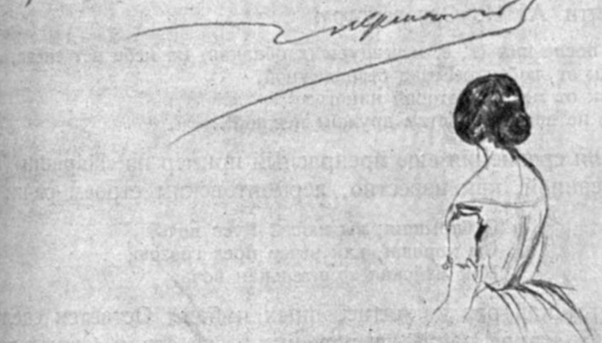
For some reason, the elder Uglinskaya did not evoke Sophie’s sympathy. Perhaps the most severe lines in the diary are about her:
“Madame Uglinskaya was also there with her daughter, but Madame seems terribly vulgar to me, I don’t understand how one can fuss so much… And this old woman danced a lot.“
The “old woman” wasn’t even forty! Might there not be something familial hidden here? Alexandra married General Albrecht, thereby becoming related to the Knorrings through the Velho family.
“By now the house is full; the boxes blaze; parterre and stalls — all seethes…
(The theater as a vanity fair)
For the aristocracy (and the bourgeoisie), the 19th-century theater was not so much a place of aesthetic pleasure as it was a platform for demonstrating status.
- The boxes turned into ceremonial showcases of families; their decoration and location spoke of rank no less than titles did.
- The audience watched not only the actors, but also their neighbors: who came with whom, who applauded, who remained silent.
- An evening at the theater was a social event, where art served as a backdrop for the exchange of glances, bows, and rumors.
In the theater converged all the passions of the century, the love of effect, pose, attire, and applause.
- The auditorium was an arena of rivalry no less than the stage itself.
- Every spectator became a participant in a spectacle of vanity, where the role was determined not by talent, but by one’s place in the boxes.
- Art, thus, was transformed into a social ritual in which aesthetics served etiquette.
Into this vanity fair Sophie inevitably fell upon finding herself in St. Petersburg.
“Aunt Louisa approached me and offered to take me to the French theater with Louisa and General’s wife Strandmann…”
If during her first visit to the theater Sophie records not so much the spectacle itself:
“There were four performances: ‘The Roquebourg Family’, ‘The Man Without a Name’, ‘My Friend Pierrot’, and ‘Teredal’. We arrived in the middle of the first performance and left before the end of the fourth”
but rather the audience – which, evidently, is inevitable for a girl who has just arrived from the provinces to the capital.
“The Duchess of Oldenburg sat next to me…, almost next to Princess Kochubey and Baron Buddenbrock“
Subsequently, she focuses on the artistic and aesthetic merits of the performances.
The description of the 1841-42 theatrical season in St. Petersburg in Sophie’s diary is a document of importance for the history of theatrical, primarily ballet, art.
The Opera “Undine”
“Aunt Louisa understood my wish. She gave me a box for a performance of Undine”
This refers to the opera by E. T. A. Hoffmann based on the famous story by Friedrich de la Motte Fouqué, a story that subsequently wandered from work to work.
Almost forgotten today (except for the version restored in Wuppertal), the opera was once what one would call a hit. It is cited as the primary inspiration for German romantic opera. It must be said – not only German, and not only opera. Its plot inspired Zhukovsky, Tchaikovsky, and Petipa alike.
Sophie records in her diary:
“The Bolshoi Theater was completely packed, not a single empty seat.”
Her diary is a source of information about the performers. Regarding the singers, she, a singer herself, is biased:
“Mr. Döring, who possesses a beautiful bass, sang very well; he performed the role of the cardinal. Breiting, of whom I had heard much and who is much spoken of here, I did not like. He has a tenor voice, but he shouts so terribly that one’s ears ring. He is very tall and stout, so he has a lot of strength to shout. The ladies’ voices seemed weak to me: Mlle Neureuther and Madame Mathis, who also shouts terribly. But overall, I liked it very much. Madame Mathis plays Sarah, and Neureuther, the emperor’s niece.”
Of the ballet numbers, she holds a higher opinion
“Mlle Schöllvogt also danced as a very beautiful 16-year-old girl, with a captivating amiability and wonderful grace.”
And she summarizes her impressions:
“Undine is a very impressive opera… The music is very beautiful, Undine is magnificent, but overall it is very loud.”
Probably, her impression was reflected not only in her diary, because subsequently she was taken only to ballets. About them, a separate story.
“Resplendent, half ethereal, obedient to the magic bow…”
(About the ballets: Herta, La Gitana, and La Sylphide)
1841/42 was the time of the triumph of the Taglioni dynasty in Russia. The father, Filippo Taglioni, is recognized as a pioneer of ballet style, having forever changed the very nature of this art. As a ballet master, he staged several ballets, of which one has survived to our days, the magnificent “La Sylphide“. The triumphant premiere of “La Sylphide” in 1832 made him the most famous choreographer, and his daughter Marie, the most famous prima ballerina of romantic ballet. Sophie’s diary contains valuable information about their creative work in St. Petersburg.
The Ballet “Herta”
Herta, or the Queen of the Elfrides, is a grand ballet in 3 acts, which Filippo Taglioni staged specifically for the benefit performance of his daughter Marie at the Bolshoi Theater of St. Petersburg. “Herta” became Taglioni’s last production for the St. Petersburg troupe. After the final performance of the ballet on March 1, 1842, the curtain was raised 18 times during the applause. Today, the ballet is lost. All the more valuable are the impressions of a real spectator:
“we gathered for the theater for the ballet ‘Herta’. Aunt Louisa and all of us went. The theater was overflowing with enthusiastic spectators.”
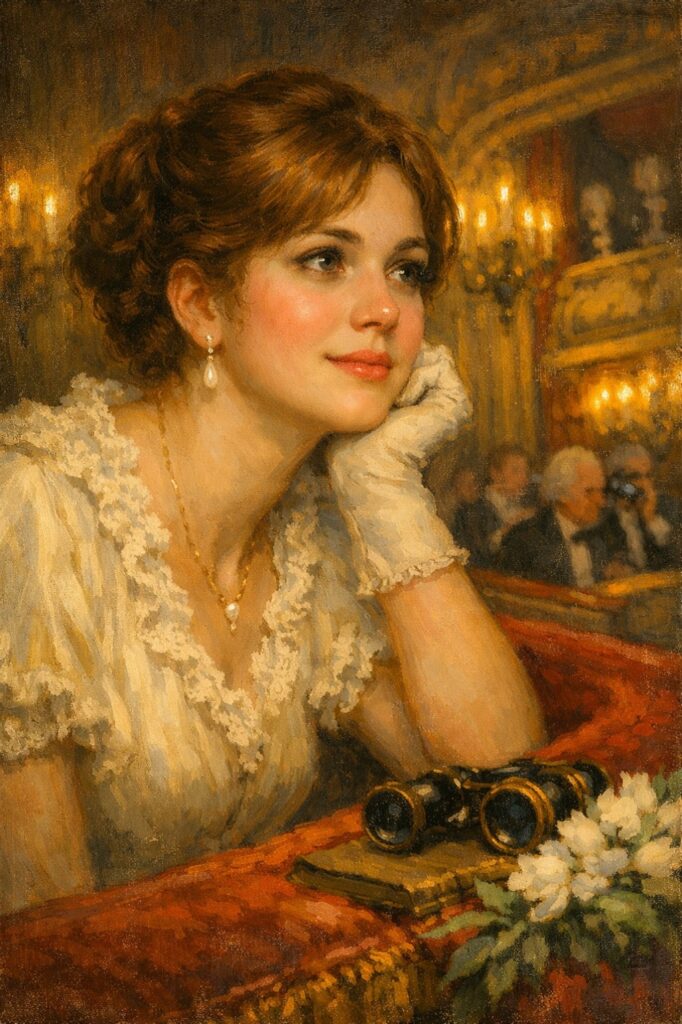
Vanity Fair — how could we do without it!
“Of the imperial family, only Mikhail Pavlovich and his two eldest daughters with Countess Apraksina were present.”
About the ballet:
“The sets are very beautiful, and Madame Taglioni herself is charming. She once again performed the dance with castanets, incredibly beautiful, and her facial expressions always mesmerize me. In this ballet, Taglioni dances a fairy who says: ‘Truth is truth’.”
About the ballerina herself:
“The name that once brought her honor now makes her someone else, which irritates her; it is as if she is making excuses.”
A fly in the ointment (literally: a little tar in the barrel of honey), of course, about the singers:
“Before the ballet, an act from the opera ‘The Elixir of Love’ was shown in a Russian rendition. The music was beautiful, but I did not like it. Mademoiselle Solovyov sang terribly, Petroff sang excellently, although he already has a very good voice. Tosca, the Italian, is magnificent; he sang well in Russian.”
The Ballet “La Gitana”
F. Taglioni staged the ballet “La Gitana, or the Spanish Gypsy” at the Bolshoi Theater of St. Petersburg in 1838. The ballet’s plot is straightforward. Gypsies kidnap a girl from a noble family, then she faces various vicissitudes of gypsy life, including falling in love with the burgomaster’s son, who cannot marry her. In the finale, her true identity is revealed, and the story concludes with a happy ending. In short, a variation of Paquita, only the action is moved to the 18th century. It seems Sophie was not entirely in the mood to watch it.
“In the evening we were supposed to go to the ballet to see ‘La Gitana’. Since the box had been reserved for me, I had to go, albeit reluctantly, because I felt almost ill, I had a cold, and a terrible runny nose besides.”
Sometimes the diary is written disjointedly; it is not entirely clear whether she changed her mind because of Taglioni’s art or the Grand Duke’s invitation.
“We were getting ready for the theater as usual… At half past two, we unexpectedly received an invitation to the Grand Duke’s, which made me very happy, because Uncle Pontus seemed to feel quite awkward that his family had not been invited. A great commotion ensued, outfits were prepared, a letter was written to Grandmamma, who kindly sent us there in three carriages. Hélène went with Grandmamma, Aunt Minna, with Aunt Jette.”
The Grand Duke is not mentioned at the theater at all, but the ballet now seems delightful:
“The Bolshoi Theater was completely full, and no sooner had we arrived than the ballet began. I must say that I have never seen such a delightful ballet. Taglioni has such charming grace, the most delightful child I have ever encountered in this genre. The second scene depicts a fair, where Taglioni is with a gypsy.”
4. The Ballet “La Sylphide” — Sophie’s most vivid account
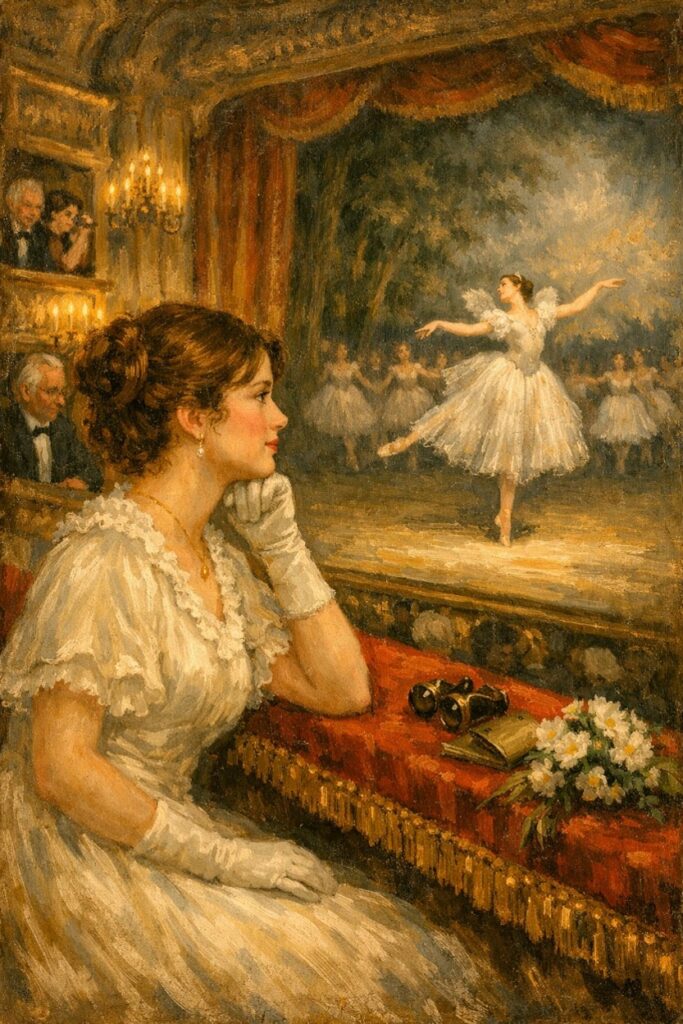
This is the central theatrical episode of the diary. Sophie describes “La Sylphide” with delight, attention to detail, and an almost poetic feeling.
On the crowded theater
“All the boxes were so overcrowded that we had to sit in the stalls. We were given the balcony, which is very unpleasant, since the gentlemen were standing right in front of us.”
On the ballet itself
“There are few costumes in the ballet, but it is absolutely delightful.”
On Taglioni, her main assessment
“Taglioni is a flawless Sylphide; it is impossible to imagine anything more graceful and carefree than her in this piece.”
On why everyone is in love with Taglioni
“I perfectly understand why Trubetskoy is so in love with her that he wants to marry her; she completely charms me every time.”
On the sets
“The sets of the first act depict the interior of a room, and Taglioni, in the role of the Sylphide, appears and disappears.” “The sets of the second act are magnificent; they depict a garden, and in the distance, water can be seen. The sunrise is a truly delightful sight.”
This is one of the most emotional and detailed fragments of the entire diary. It is striking that the ballet has been preserved in detail to this day.
“Аnd, chanting, they led me to the church…”
(December 6th – the Emperor’s name day)
The diary contains many impressions of court and high-society life. But standing out in the descriptions are the events related to the Emperor’s name day. First, there was a church service, which those close to the court strove to attend to confirm their “chosen” status.
“I got up earlier to finish my toilette before Aunt Louisa would need the maid. We had to go to the palace with Aunt Minna, who picked us up in her carriage at 11 o’clock. The hall was completely empty, but soon it filled with ladies, whom everyone admired. Military men and high-ranking officials squeezed through to take their places. The music in the next room was muffled, and two couples called out to each other. People were constantly coming and going, until finally silence fell, and the herald’s shouts ceased. Then the Emperor and the heir’s wife came down, followed by Maria and Alexandrina…, then the Dukes of Oldenburg. Next came the grand dukes and grand duchesses and maids of honor; everyone entered the church.
We were also fortunate enough to attend the entire service. We could not see the ladies of the highest family, but we had a very good view of the Emperor and the grand dukes. From there we returned to the gallery to watch the return of the entire procession. The ladies who had remained in the hall all stood up and bowed low, returning in the same order. This sight gave me immense pleasure, for it is impossible to imagine this splendor and luxury without seeing it with one’s own eyes.”
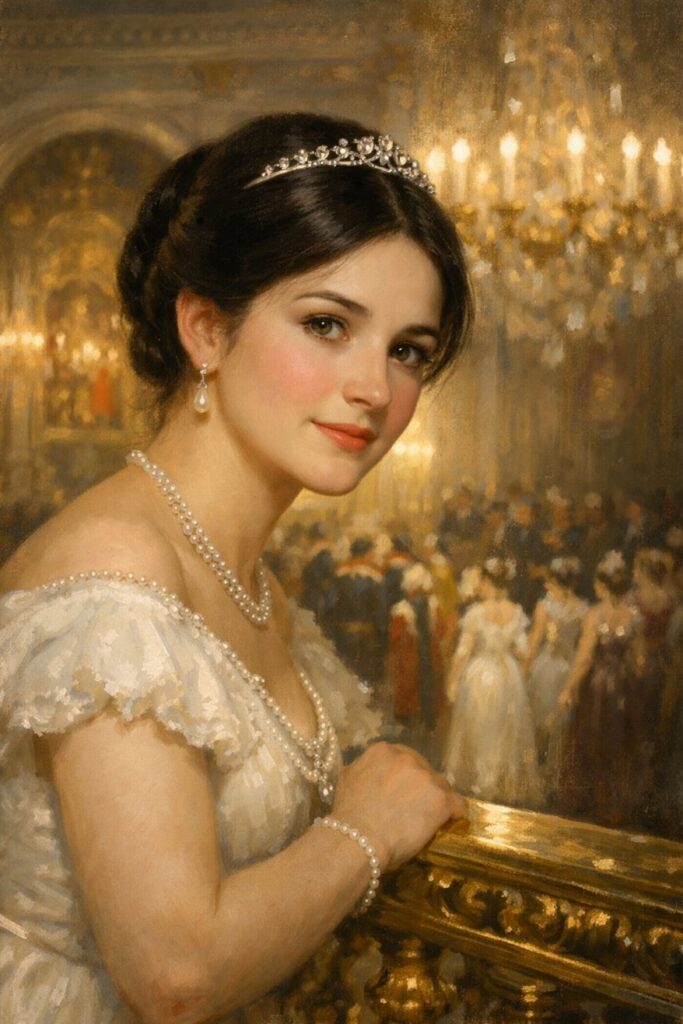
“And now, on rounds of family dinners they trundle daily to present…”
(a court ball)
Sophie’s diary contains a vivid mention of a colorful ball, which became one of the central events of the 1841/42 winter season. This was not just a social evening; it was a ball attended by the royal family, which automatically made it a top-tier event.
Sophie describes the atmosphere as it might be seen by a young girl finding herself in the very heart of the capital’s splendor:
- sparkling chandeliers,
- the rustle of dresses,
- the gleam of epaulettes and orders,
- music that “filled the entire air,”
- and the feeling that all of St. Petersburg had gathered in one hall.
The Royal Family:
“when all eyes are turned in one direction”
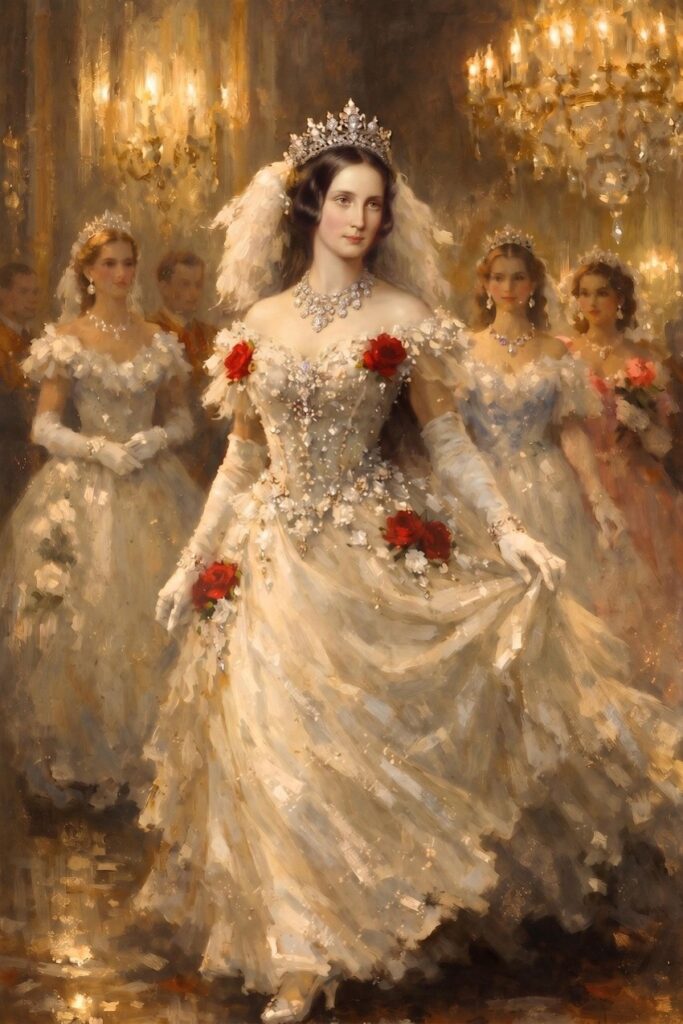
The Royal Family: “when all eyes are turned in one direction.”
Sophie notes that the appearance of the royal family members changed the atmosphere instantly. In such moments:
- the music faded,
- conversations died down,
- the dancers stopped,
- and the entire hall turned in one direction.
For Sophie, this was a moment when social life and state power merged in one space. She was observing not just a ball; she was observing a ritual of the empire, where every gesture had meaning.
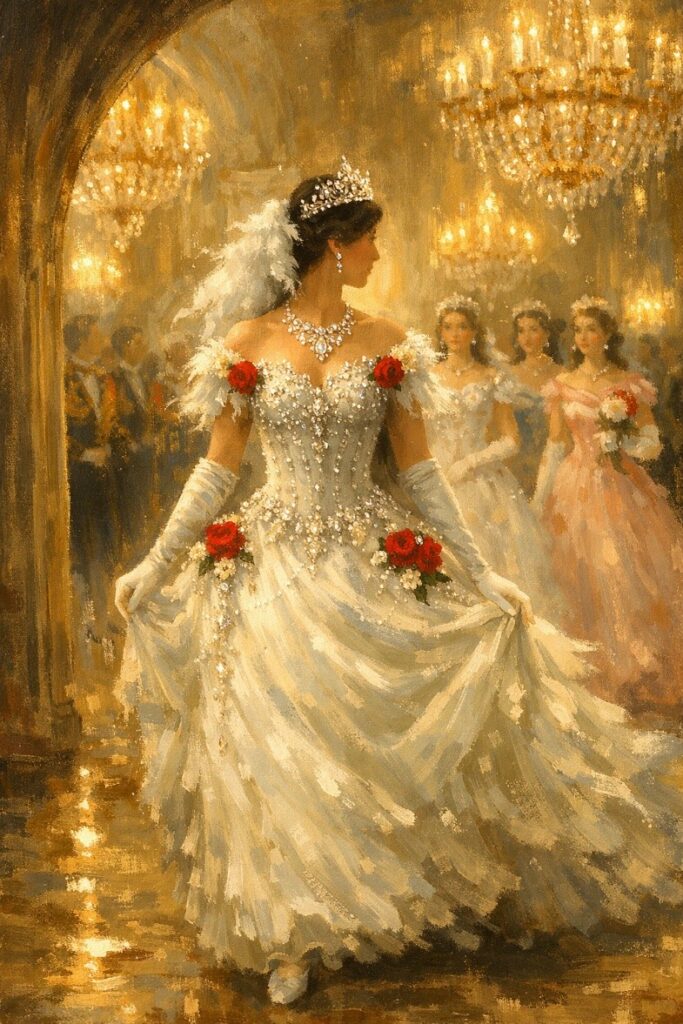
This ball is one of those episodes where Sophie shows herself not as a participant, but as an observer. She describes:
- not her own dances,
- not her own acquaintances,
- but the people,
- their manners,
- their roles,
- their interactions.
This highlights her character: she does not dissolve into high society, but looks at it from the outside, like a person for whom it is more important to understand than to participate.
Social life for her is not a goal, but a backdrop against which her personal story unfolds.
“But to another I belong: to him I shall be faithful all my life…”
(Sophie’s choice)
Sophie Knorring’s diary is a female version of “Onegin”, only without the fiction. It is a document of the era, where every line is alive, sincere, and real.
It shows what the life of a young noblewoman of the 1840s looked like: high society, prayers, love, doubts, illnesses, balls, singing lessons, family ties, death, hope.
And most importantly, a heart that is searching for its path.
Sophie is religious. But she is not prone to loud declarations. Her religiosity is quiet, intimate, almost shy.
She confesses:
“Oh, when the heart is so overflowing, one thirsts so strongly for the Lord. One so wants to know what will happen, what is the Lord’s will!”
And also:
“Oh, I only sighed, expressing my feelings and thoughts, which I sent to the Lord here and there.”
This is not a formal prayer; it is a conversation she constantly holds within herself.
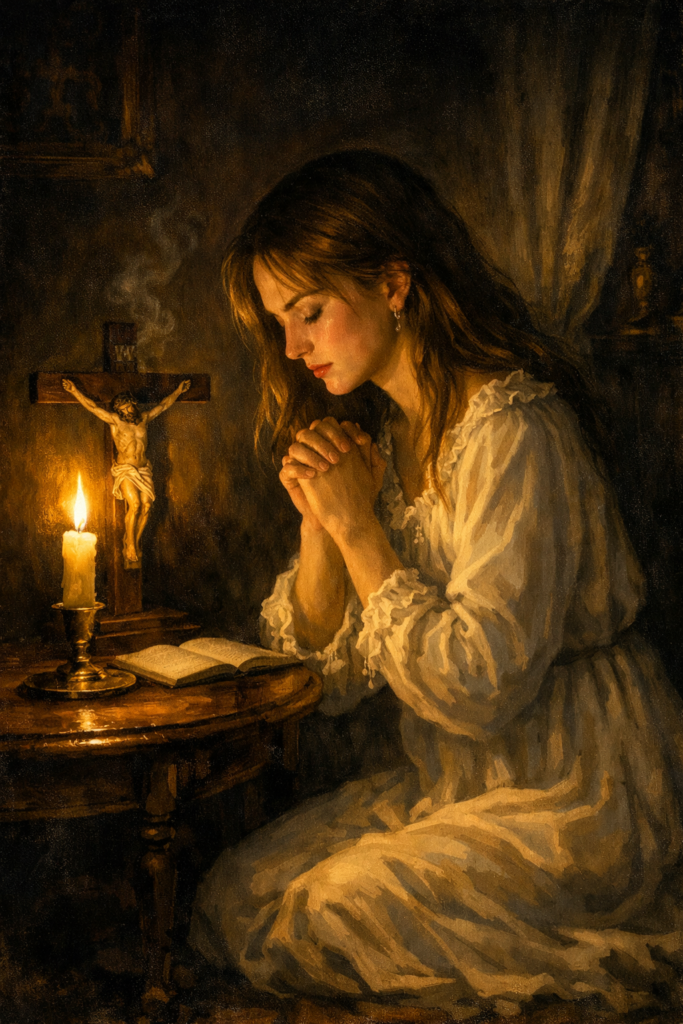
Sophie frequently mentions morning prayers in her diary:
“I prayed in the morning… to my faithful Jesus, for comfort and help…”
This appeal is simple, almost childlike. She does not look for lofty words; she looks for comfort.
Sophie listens attentively to sermons and reads them at home:
“The morning prayer was edifying…” “We read a sermon… it was very beautiful.”
For her, a sermon is not an obligation, but food for the soul, an opportunity to stop and think.
In moments of loss and anxiety, Sophie turns to God, asking not for a miracle, but for acceptance:
“Lord, preserve my dear parents, my beloved sisters… have mercy on all the poor and be a grace to everyone.”
This is a prayer in which there is no egoism, only care for others.
At the end of 1841, on New Year’s Eve, she writes:
“At 10:30, after we had all bid each other farewell in the departing year, all the guests dispersed. Then we went into the drawing room with the young ladies and Aunt Louisa, who read to us… the ‘Our Father’ prayer. We were all very moved. I felt a strong longing for my family. Ah, another year, a whole year, has passed, with all its events and influences, both external and internal. But the Lord’s grace was great, very great; He preserved my parents, my sisters, all our loved ones. He caused us no great suffering; He so lovingly guided us, protected us, and shielded us from all evil and wickedness. Oh, what have I done for Him in return? Oh, my heart is still the same, fickle and wicked, indifferent and cold, not even devoted to Him, my faithful and dear Savior. I did not even take Holy Communion. Sins accumulate every day, and, dreaming, I live from one day to the next… May the Lord grant me grace this year too.”
Over the year of the diary, Sophie changes. She becomes more confident, more attentive to herself, calmer. She learns to make decisions, to bear responsibility, to say “no” when necessary.
She matures, quietly, without drama, but deeply. And after all the temptations of capital life, she records in her diary:
“In August, I gave him my hand…”
But now she will not back down from her decision. The choice has been made.
Instead of an Epilogue.
(Sophie’s subsequent fate)
In September 1842, in Reval, she married Major Kursell. In 1843, the couple had a daughter, who was also named Sophia. There were 3 more sons. Sophie led the life of a respectable provincial hostess on her husband’s estate, Sinalep (on the territory of the modern city of Haapsalu in Estonia):
Between the dally and the do
a secret she discovered: how to govern
her husband monocratically,
and forthwith everything went right.
She would drive out to supervise the farming,
she pickled mushrooms for the winter,
she kept the books, “shaved foreheads,”
to the bathhouse would go on Saturdays,
walloped her maids when cross —
all this without asking her husband’s leave
She passed away in 1904. The Orthodox church of Sinalep, now in ruins, remains a peculiar monument to her:
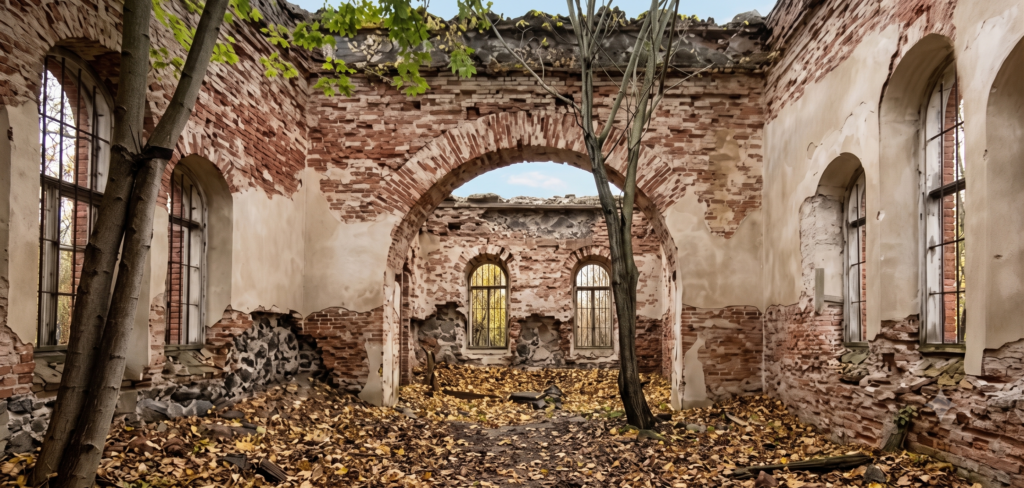
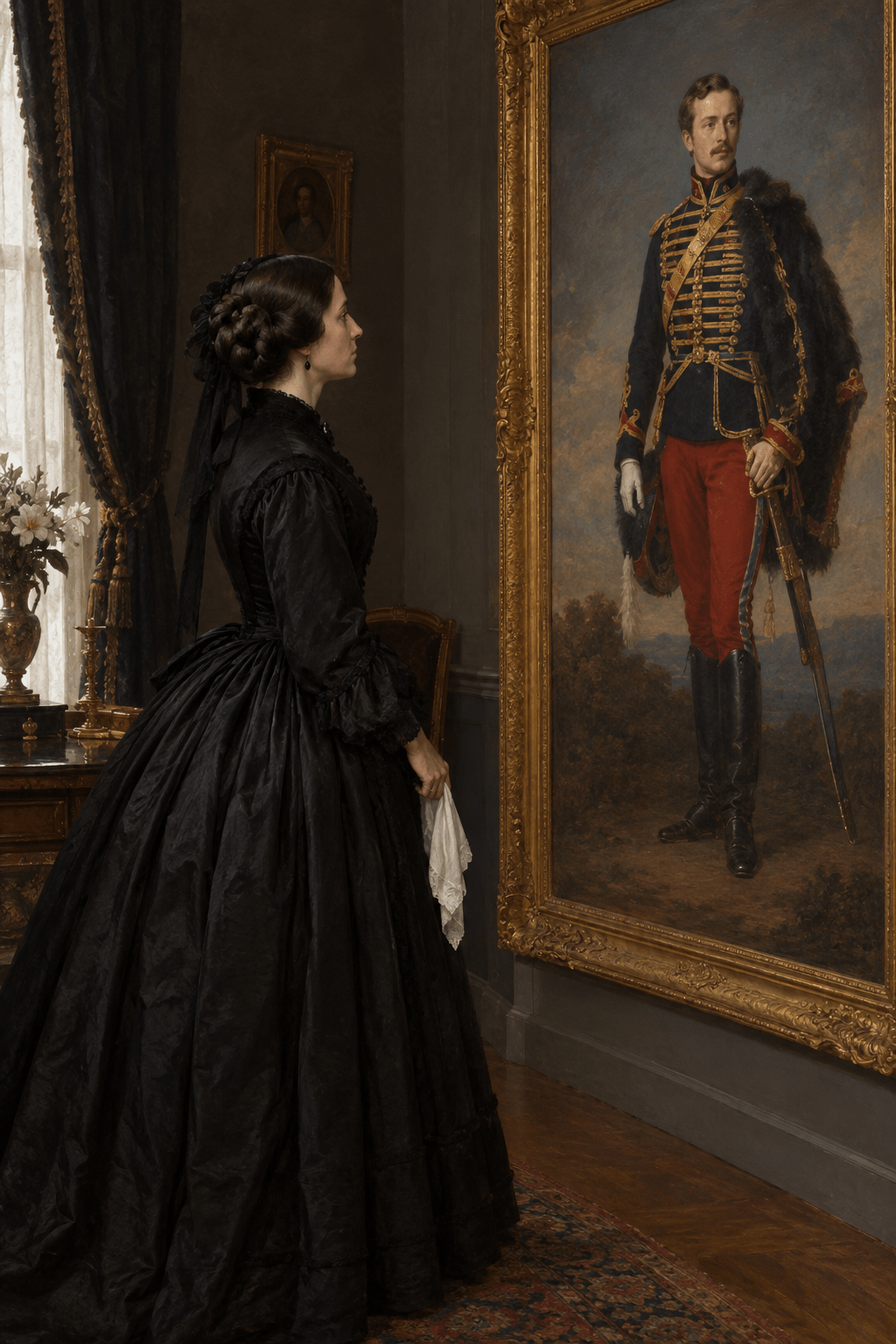
AI reconstruction by Sergey Gavrilov.
Sources:
- [1] Cavatine de Mercadante “Soave Imagine” – a highly complex part to perform, see e.g. Mirela Paraleu -Soave immagine RECITAL MUZEUL DE ARTA
- National Archives of Estonia (EAA). F. 5269. Op. 1. D. 106. Tagebuch der Sophie von Knorring. Band II [Diary of Sophie von Knorring. Volume II] (1841–1842).
- Gershtein E. Lermontov’s Duel with Barante // M. Yu. Lermontov / USSR Academy of Sciences. Institute of Russian Literature (Pushkin House). — Moscow: USSR Academy of Sciences Publishing House, 1948. — Book II. — PP. 389—432. — (Literary Heritage; Vol. 45/46). https://feb-web.ru/feb/litnas/texts/l45/l45-389-.htm
*The article uses AI-generated images, except for the pencil sketch and the photograph of the church ruins.
**The headings and text of this article feature quotations from Alexander Pushkin’s Eugene Onegin. For the English rendition of these verses, the author has utilized the classic translation executed by Vladimir Nabokov (Source: nabokov-lit.ru).
Discover more from Strahlborn and De Rionzini
Subscribe to get the latest posts sent to your email.
