The Three Velho Sisters:
The Forgotten Baronesses of Tsarskoye Selo
Article Author: Historian Sergei Gavrilov
When speaking of Pushkin’s female circle during his Lyceum years, Ekaterina Bakunina or Natalia Kochubey are most often recalled. But living right alongside the young poet were other girls—the three Velho sisters, daughters of the court banker Baron Joseph Velho and Sofia Severin. They were a constant presence in Tsarskoye Selo in the 1810s—literally across the street from the Lyceum.
And although Pushkin scarcely mentioned them in his verse, their biographies offer a remarkable cross-section of the era: court intrigues, Lyceum legends, the tragically short life of one sister, and the long life of another spent in the shadows. Only recently have materials about them begun to penetrate Pushkin studies, for instance, in this article by Sergei Gavrilov:
“↪ The Third Sister… The Life of Celestine Velho”
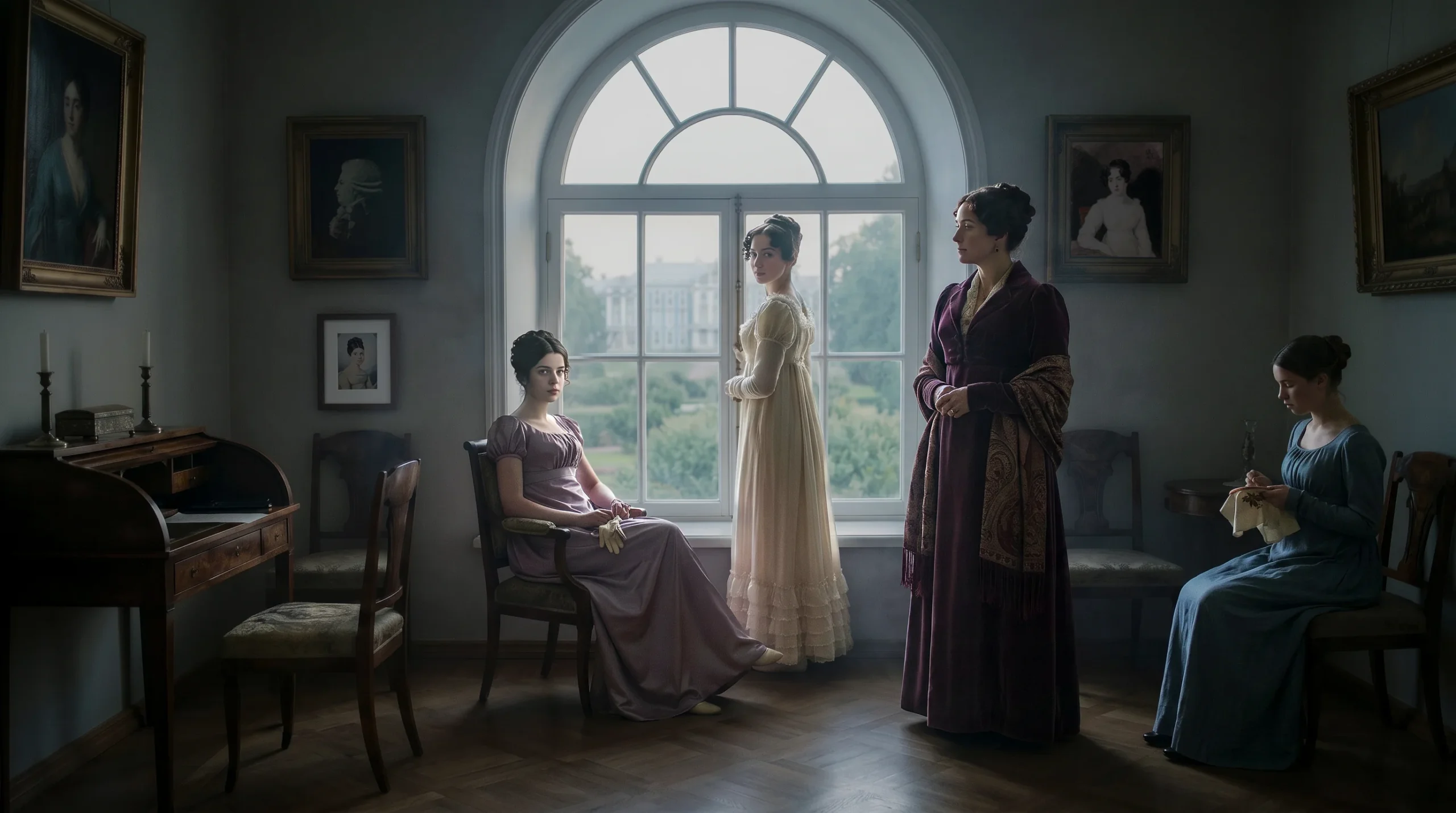
Sofia Velho — “the universal favorite of the youth.”
Sofia, the eldest sister, was born in 1793. She was indeed that “universal favorite of the youth” of whom Annenkov wrote. We read in his work “an anecdote about Pushkin meeting, in the house of Baron Velho, whose eldest daughter was the universal favorite of the youth, the Sovereign Alexander Pavlovich; about their journey to the Babolovo Palace, a monument to which remains Pushkin’s unpublished inscription, and so forth”[1] (Annenkov, Pushkin in the Alexandrine Era).
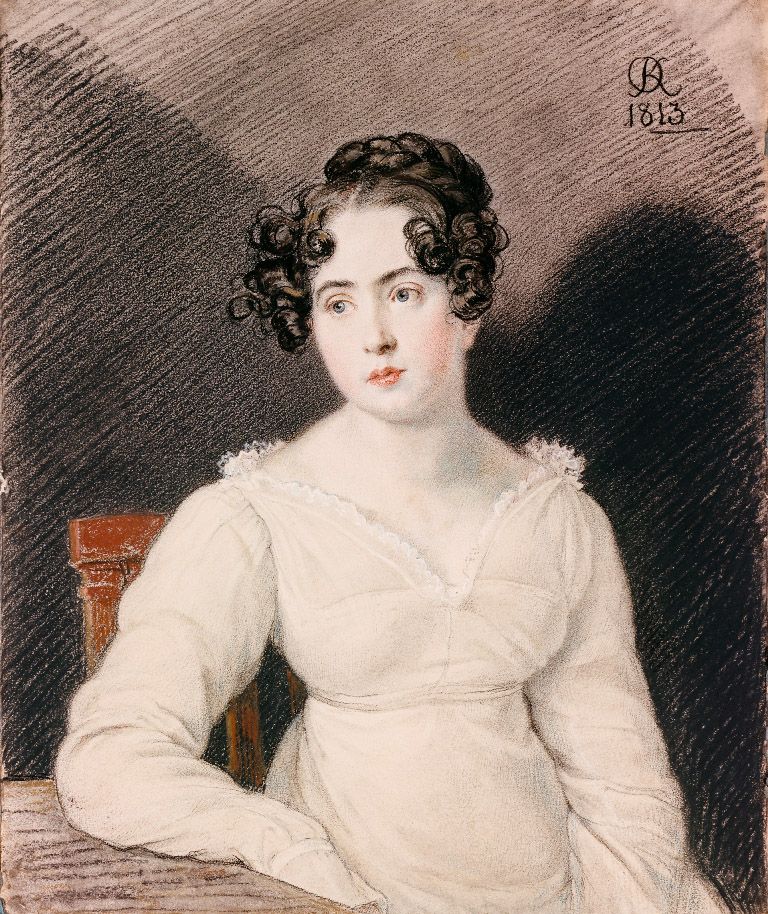
Sofia truly moved at the very center of Tsarskoye Selo life. Emperor Alexander I frequently visited her mother’s house, and contemporaries made no secret of his distinct favor toward the young woman.
Later, Sofia married Alexei Rebinder, future commander of the Semyonovsky Regiment. Their daughter was baptized by the Emperor himself—an exceedingly rare honor: the godparents were the infant’s maternal grandmother and Emperor Alexander I.
Sofia died early in 1840, leaving behind five children.
Josephine Velho — a Muse with a Tragic Fate
Josephine is the most enigmatic of the sisters. She was born in 1802, after her father’s demise, and, despite having a living mother, was raised in the home of Tepper de Ferguson, who was married to her mother’s sister. He was a music teacher at the Lyceum, and thus Josephine was in constant contact with the Lyceum students:
“In his home, the Lyceum students… gathered for choral lessons… drank tea, chattered, sang, and made music.”
The young poets, Pushkin included, inevitably fixed their attention upon this beautiful and vivacious girl.
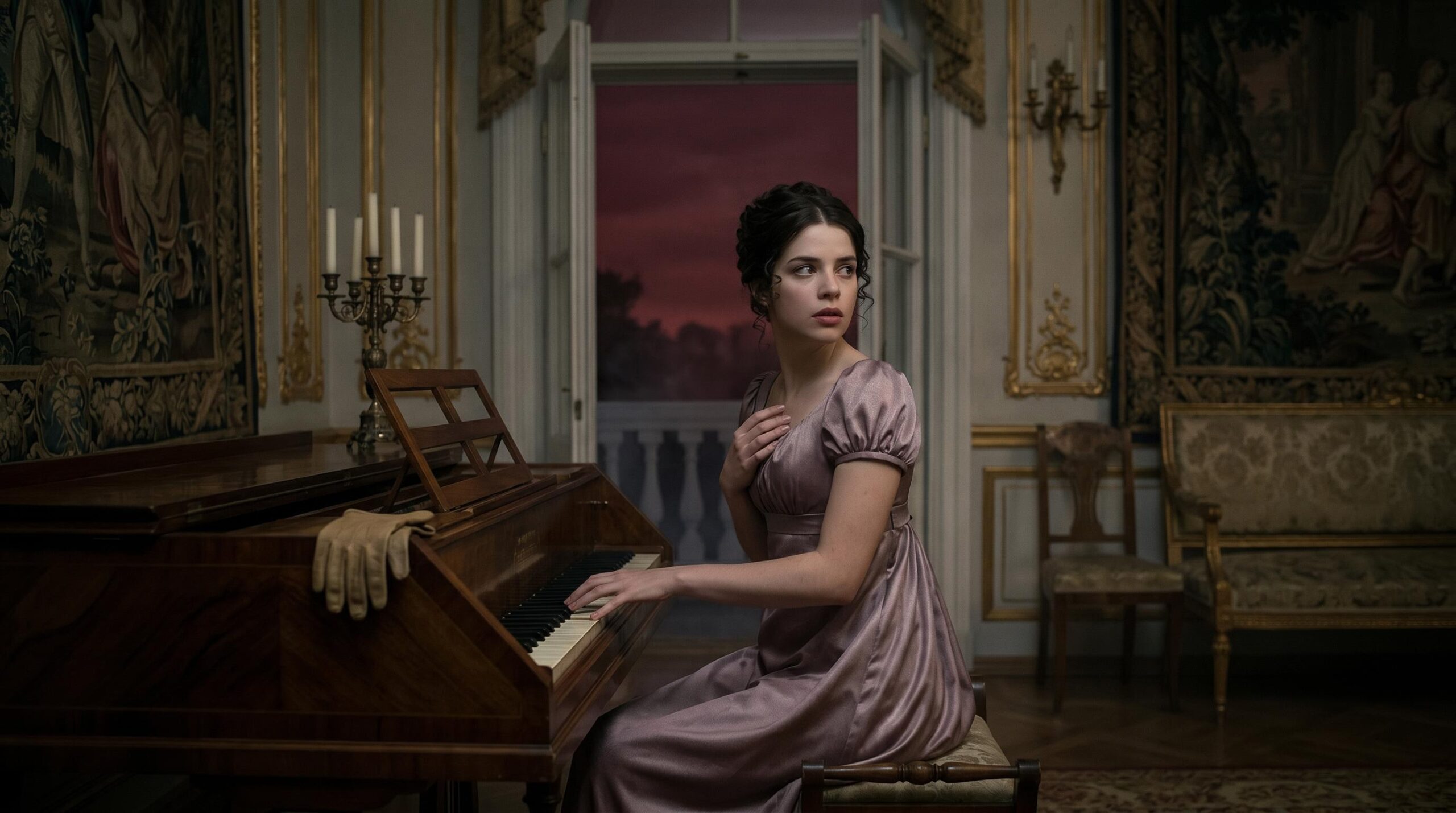
“The poetic images of Josephine… created that unique atmosphere… of the final year of Pushkin’s class at the Lyceum.” (Stupel)
But her fate was cut tragically short: in 1820, Josephine died in Paris after falling from a window. Tepper wrote of the “slander” that surrounded her name, which only heightens the aura of mystery.
Later, researchers even speculated that Josephine might have been Pushkin’s “secret love,” the woman whose memory echoes throughout his mature lyric poetry.
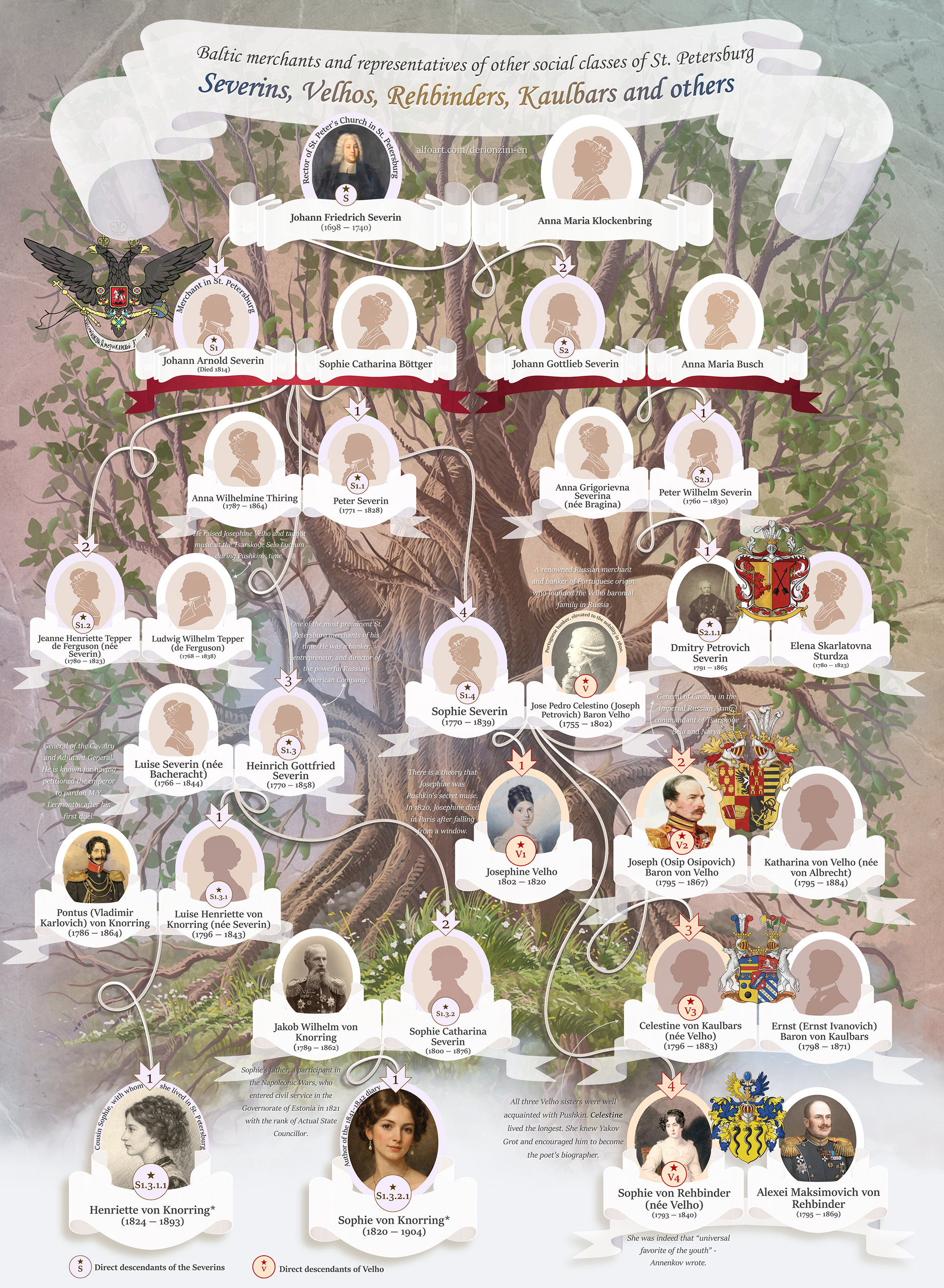
Portraits marked with an asterisk (*) were created by AI.
Celestine Velho — “the third sister” who lived a long life
Celestine is the middle sister by age—meaning she was actually the second, yet by far the most underappreciated.
“There are practically no documents in circulation concerning the third sister, Celestine.” It is precisely this gap that Sergei fills, reconstructing her biography through the archives of Estonia and Finland.
Birth and Youth
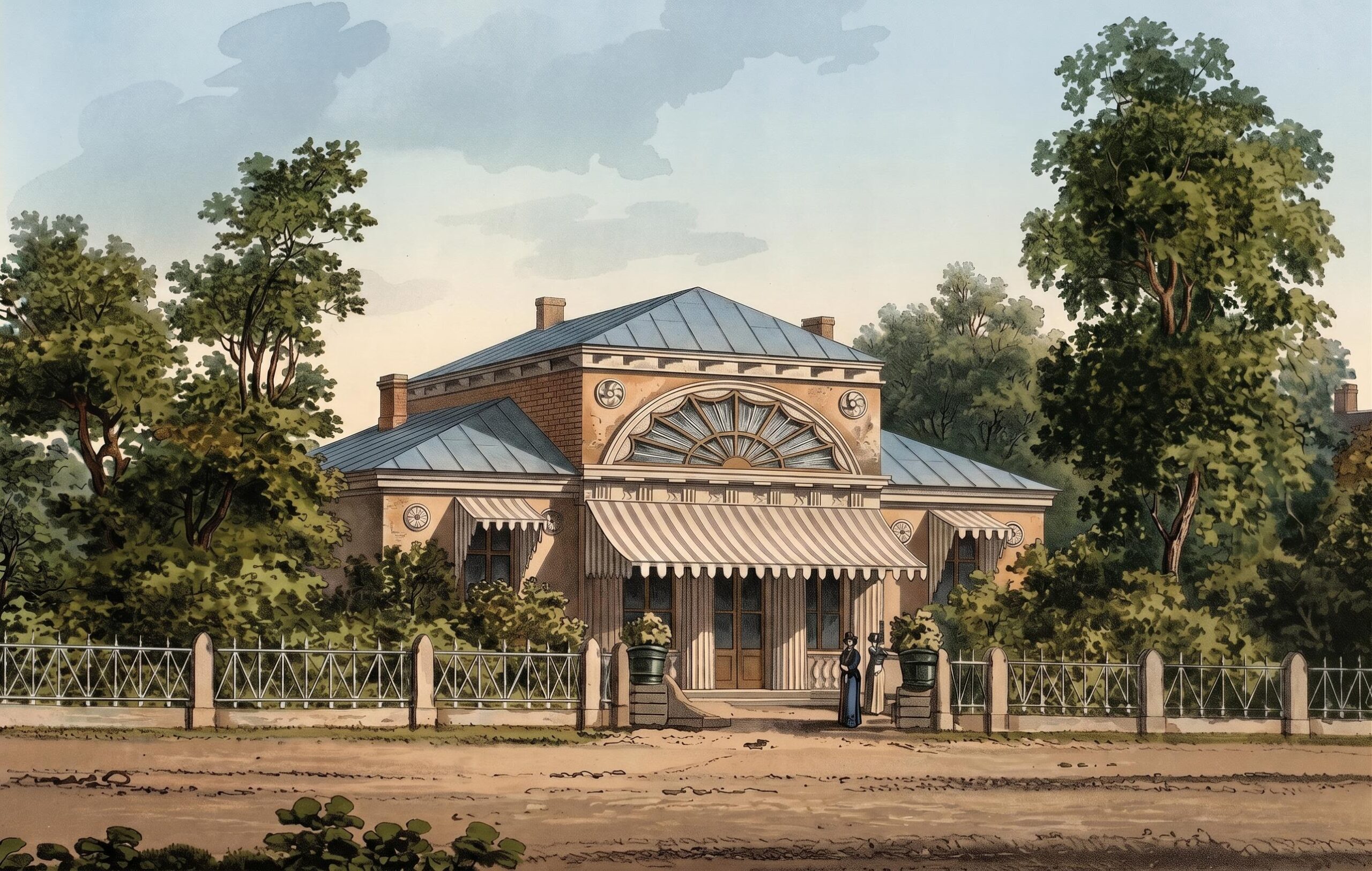
Celestine was born in 1796. She spent her childhood in Europe; her mother took her daughters across Germany and Italy during the Napoleonic Wars. In 1811, the family settled in Tsarskoye Selo, in a house on Srednyaya Street – the very one the Lyceum student Langer included in his album “12 Views of Tsarskoye Selo.”
The Lyceum Years
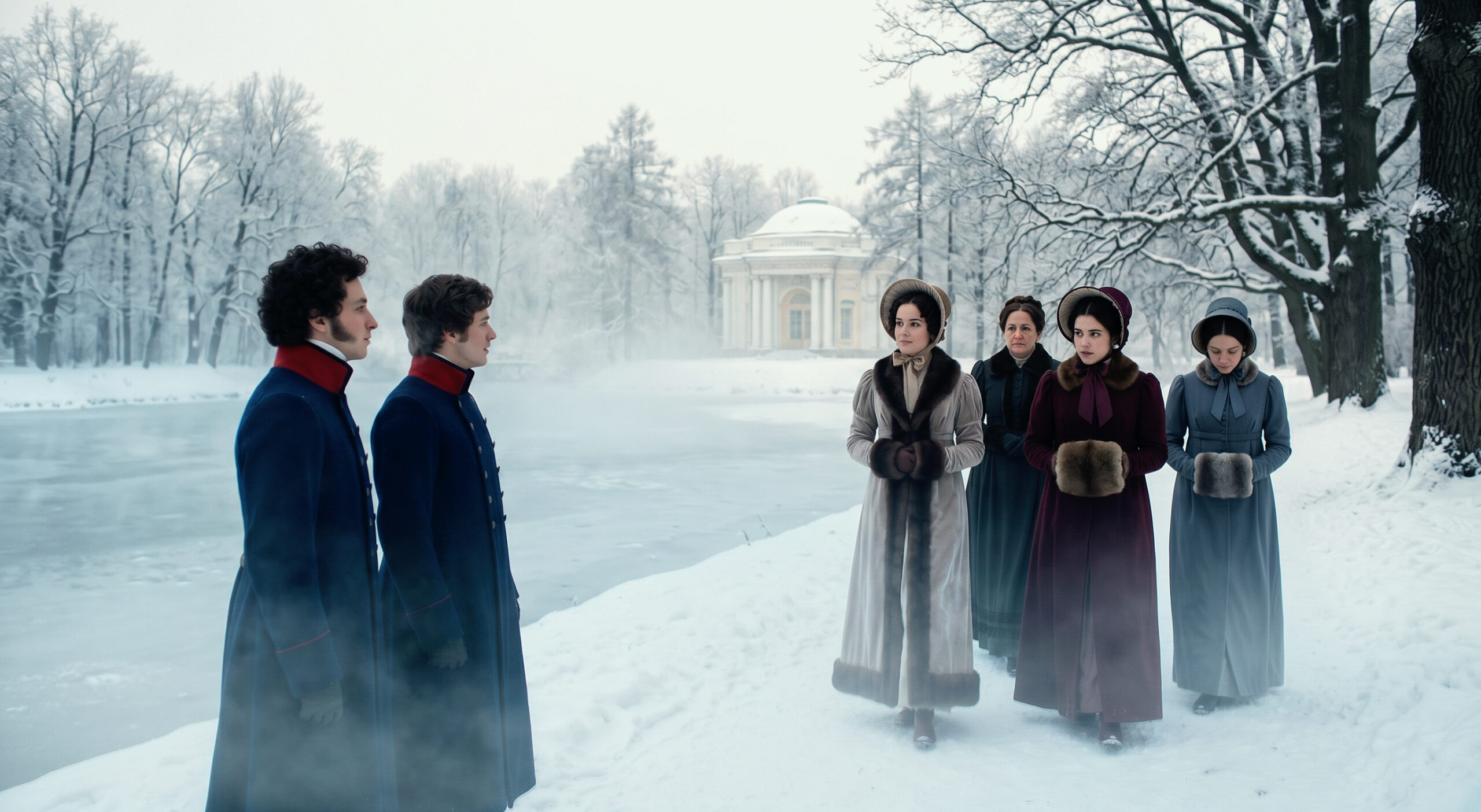
It was Celestine and her sisters who became the addressees of Pushkin’s impromptu verse:
“And you shall be left wondering / On the shore of frozen waters: / ‘Is Mademoiselle Schröder with the red nose / Not bringing the dear Velhos?'”
This is a rare instance of Pushkin mentioning them directly.
Marriage and Relocations
Celestine married late, in 1837, after Pushkin’s death. Her husband was Baron Ernst Kaulbars, an officer in the Russian army. With him, she moved to Helsingfors (Helsinki), where the Baron served as the town major.
Yakov Grot, a future academician, frequently visited the Kaulbarses and left behind a wealth of lively details:
“At her place is now the best spot to spend a slice of the evening.” (Ya. Grot. From a letter to P. Pletnev)
The Final Years
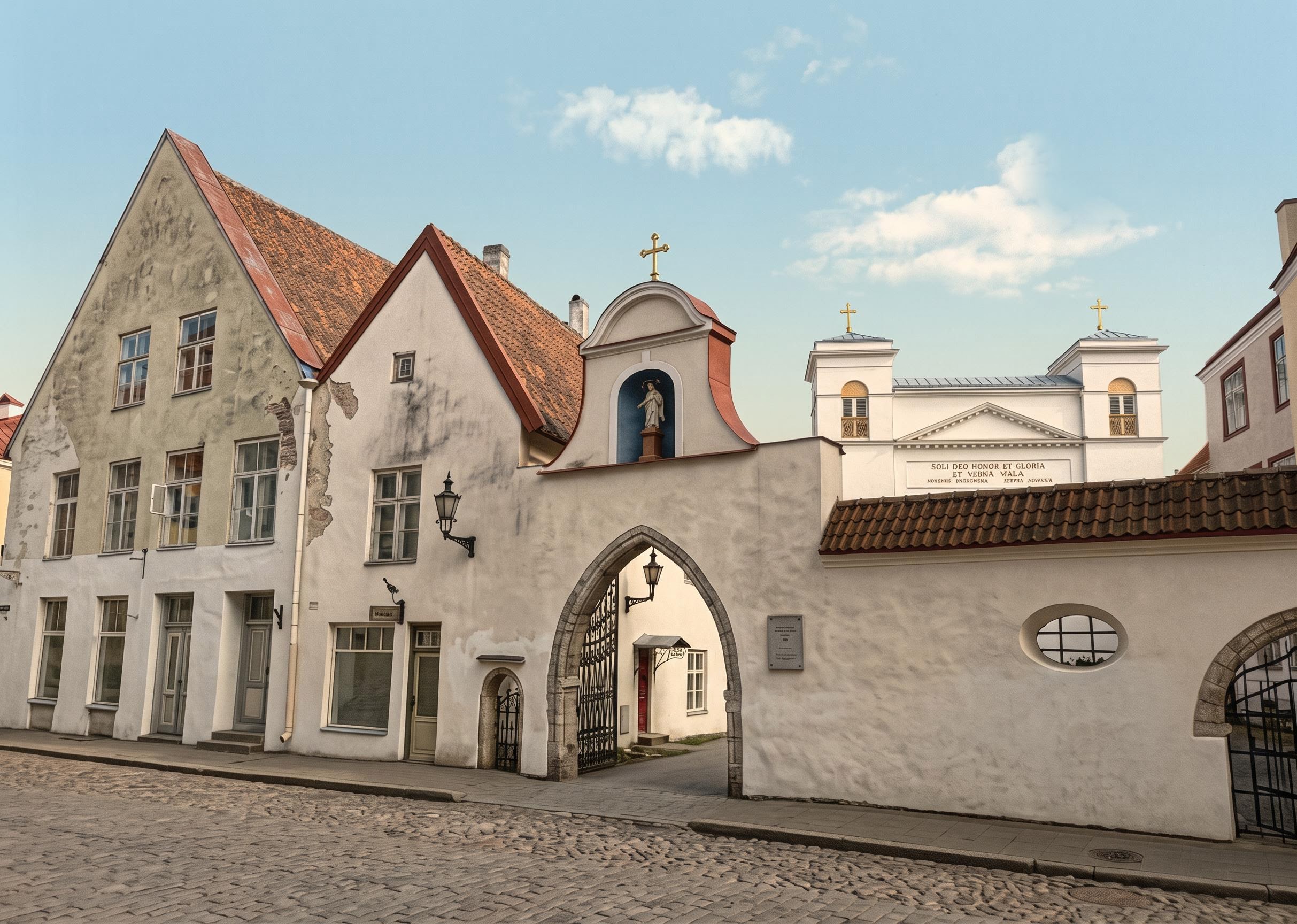
After her husband’s retirement, Celestine lived in Revel (Tallinn), on Russkaya Street, right next to the Catholic cathedral. She died in 1883 at the age of 87:
“…died… of senile decrepitude… partook of the Holy Sacraments.”
Her grave has not survived, but her will has, in which she leaves a substantial portion of her estate to the Catholic parish.
Why They Are Worth Remembering
The history of the Velho sisters is a story of how women on the periphery of Pushkin’s biography turn out to be crucial witnesses to the era:
- Sofia — at the center of Alexander I’s court intrigues.
- Josephine — in the circle of the Lyceum students, quite possibly the young Pushkin’s first muse.
- Celestine — the connecting link between the Lyceum, Finland, Estonia, and later Pushkin studies.
Their fates are not merely biographies. They form the background against which Pushkin was formed, his milieu, his earliest impressions of female beauty; they educated his sensibilities. And they also reflect his impressions of the complex relationships within female society. Such is the essence of The Tale of Tsar Saltan, conceived when he saw Celestine once again in Tsarskoye Selo in the summer of 1831…
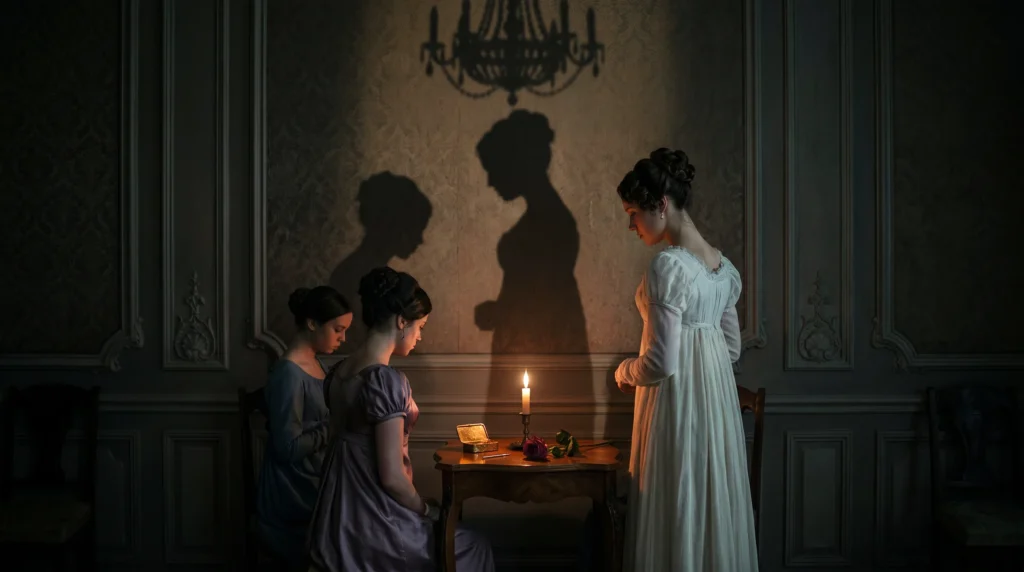
*The article uses images generated with AI, except for the photograph of the house in which Celestine lived, the portrait of Kiprensky, and the image of V. Langer.
Resources
[1] P. V. Annenkov Pushkin in the Alexander Era Alexander Sergeevich Pushkin in the Alexander Era (Annenkov) – Wikisource, // P. V. Annenkov Pushkin in the Alexander Era, p. 34. Alexander Sergeevich Pushkin in the Alexander Era: Annenkov Pavel Vasilievich: Download free, rent and stream: Internet Archive
Research and Biographical Materials
- Gavrilov, S. Article “The Third Sister… The Life of Celestine Velio”.
- Stupel. Research on how Josephine’s poetic images created the unique atmosphere during the final year of Pushkin’s class at the Lyceum.
Memoirs, Letters, and Historical Accounts
- Annenkov, P. V. Work “Pushkin in the Alexandrian Era” (contains an anecdote about Emperor Alexander I and Sophia Velio).
- Grot, J. K. From a letter to P. Pletnev (providing details about Celestine Velio’s married life).
- Langer. Album “12 Views of Tsarskoye Selo” (historical record featuring the Velio family house on Srednyaya Street).
- Tepper de Ferguson. Personal writings mentioning the “slander” surrounding Josephine Velio’s name.
Primary Sources
- Pushkin, A. S. The impromptu poem starting “And you will remain with the question…”, which was addressed to the Velio sisters.
- Pushkin, A. S. “The Tale of Tsar Saltan” (mentioned in the context of impressions formed when he saw Celestine again in Tsarskoye Selo in the summer of 1831).
🌿 Text-Based Genealogical Tree of the Most Prominent Representatives of the Severin, Velho, Rehbinder, and Other Families
S0 Johann Friedrich Severin (1698–1740) | Wife: Anna Maria Klockenbring
- S1 Johann Arnold Severin (d. 1814) | Wife: Sophie Catharina Böttger
- S1.1 Peter Severin (1771–1828) | Wife: Anna Wilhelmine Thiring (1787–1864)
- S1.2 Jeanne Henriette Tepper de Ferguson (née Severin) (1780–1823) | Husband: Ludwig Wilhelm Tepper de Ferguson (1768–1838)
- S1.3 Heinrich Gottfried Severin (1770–1858) | Wife: Luise Severin (née Bacheracht) (1766–1844)
- S1.3.1 Luise Henriette von Knorring (née Severin) (1796–1843) | Husband: Pontus (Vladimir Karlovich) von Knorring (1786–1864)
- 1.3.1.1 Luise Henriette von Knorring (1824–1893)
- S1.3.2 Sophie Catharina Severin (1800–1876) | Husband: Jakob Wilhelm von Knorring (1786–1864)
- 1.3.2.1 Sophie von Knorring (1820–1904)
- S1.3.1 Luise Henriette von Knorring (née Severin) (1796–1843) | Husband: Pontus (Vladimir Karlovich) von Knorring (1786–1864)
- S1.4 Sophie Severin (1770–1839) | V1 Husband: Jose Pedro Celestino (Joseph Petrovich) Baron Velho (1755–1802)
- S1.4.1-V1 Josephine Velho (1802–1820)
- S1.4.2-V2 Joseph (Osip Osipovich) Baron von Velho (1795–1867) | Wife: Katharina von Velho (née von Albrecht) (1795–1884)
- S1.4.3-V3 Celestine von Kaulbars (née Velho) (1796–1883) | Husband: Ernst (Ernst Ivanovich) Baron von Kaulbars (1798–1871)
- S1.4.4-V4 Sophie von Rehbinder (née Velho) (1793–1840) | Husband: Alexei Maksimovich von Rehbinder (1795–1869)
- S2 Johann Gottlieb Severin | Wife: Anna Maria Busch
- S2.1 Peter Wilhelm Severin (1760–1830) | Wife: Anna Grigorievna Severina (née Bragina)
- S2.1.1 Dmitry Petrovich Severin (1791–1865) | Wife: Elena Skarlatovna Sturdza (1780–1823)
- S2.1 Peter Wilhelm Severin (1760–1830) | Wife: Anna Grigorievna Severina (née Bragina)
Discover more from Strahlborn and De Rionzini
Subscribe to get the latest posts sent to your email.
